During his 20-year tenure with specialty insurer Fortegra, Chief Executive Officer (CEO) Rick Kahlbaugh’s leadership has seen the company expand into a multi-line carrier with annual premiums in the billions of dollars, supported by a willing and able team dedicated to generating profitable underwriting for shareholders.
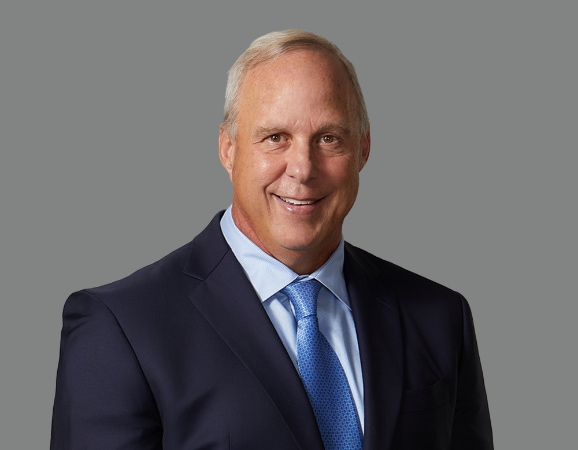 Kahlbaugh, who also serves as President of Fortegra, joined the firm in 2003 specifically to get liquidity for the owners of its predecessor. Three years later a deal was signed, closing in 2007 after regulatory delays. Then, in 2014, an enticing offer from Tiptree Inc. (NASDAQ: TIPT) saw Fortegra join the Tiptree family of companies, which is where it remains today.
When Kahlbaugh first joined the insurer, it was a mono-line credit insurance company with huge amounts of cash and exceptional technologies, underwriting $140 million in annual gross written premium and equivalents (GWPPE). Now, Fortegra’s annual GWPPE is approaching $3 billion.
Against this backdrop, Reinsurance News spoke with Kahlbaugh about the firm’s growth both in the past and in the future, as it continues to pursue attractive tuck-in acquisitions and eyes new markets.
“My predecessor was quite wise and invested in technology early on to improve productivity. So, good cash flows, very steady loss ratios, the deviation to static mean was plus or minus three points, which in our world is pretty much nothing.
“We had a model that would support more leverage and be a good platform for growth because of the cash flow dynamics and how stable and steady it proved to be. So, it was basically our financing source to be able to reach into adjacent verticals and begin to grow the business, which we’ve done,” said Kahlbaugh.
To start, explained Kahlbaugh, Fortegra targeted the service contracts and warranty sector as it looked like what the firm was already doing, single premium, big cash flows, with very steady loss ratios. After mastering that and seeing the business grow, the next, nice adjacent vertical was non-standard auto.
“It was a place for us to test our capabilities and put a property and casualty programme business together. We knew we could do it in credit, we knew we could do it in service contract and warranty, now let’s try property and casualty, and we added a good bit of success there,” said Kahlbaugh.
Impressively, and somewhat unusual for non-standard auto, Fortegra’s economic combined ratios were sub 88% for this line of business, which in turn gave Kahlbaugh the confidence to make hires as it began to enter more into mainstream specialty business.
“That would have started probably, if I remember correctly, in 2016/2017. And now, I wouldn’t be shocked if the trailing 12 months was approaching $3 billion in premium. So, from $140 million to $3 billion, that’s a lot of growth.
“But probably more importantly, we’ve been able to maintain a combined in the low 90s during those 20 plus years. And that’s a function of business mix, it’s a function of favourable market environments, it’s a function of technology being able to assist us in maintaining good productivity so that our margins do not get eroded with the growth. And we’re scaling the business now,” said Kahlbaugh.
In recent times, Fortegra has continued to grow via the completion of a number of strategic acquisitions, while it also secured a $200 million investment from Warburg Pincus in June 2022.
“We’d like the growth to continue,” emphasised Kahlbaugh, adding that in U.S. specialty specifically, he’s expecting further growth over the next 24 to 36 months, with a hyper-focus on specialty business.
In Europe, Fortegra’s recent acquisitions include a majority stake in Ingenasys, Ltd., the parent of Defend Insurance Company in 2019, the acquisition of ITC Compliance in the UK in 2022, and most recently, its purchase of a majority interest in Premia Solutions Limited in 2023, which expands its auto market solutions business in the UK and Ireland.
“What we were doing is filling out strategic voids,” explained Kahlbaugh. “So, we have Fortegra Europe Insurance Company, and we were underwriting warranty and service contracts because it’s insurance in Europe. And the issue became, okay, how do we adjudicate the claims? Defend had a nice book of business in Eastern Europe and was the dominant player in terms of market share. The underwriting results were fabulous. We were their underwriter, so we had a pretty good knowledge of how that book would work and where we could take it, and we’ve not been disappointed.
“And then the same thing with ITC and Premia. They were customers of ours who wanted to join the family for a variety of reasons, either they had come to the end of their run as an entrepreneur and wanted to move on to something else. Or, for example, with Premia they just felt like the market conditions were changing to such an extent that it made more sense to be within a family with a big balance sheet, to be able to support their growth initiatives going forward.”
Clearly, strategic acquisitions are desirable for Fortegra, and while Kahlbaugh stressed that it’s always a question of build or buy, doing something very big just isn’t on the cards.
“These little tuck-in deals, they add a lot of value. My team would probably tell you they’re as big of a headache as a big one, which is probably a fair criticism. But again, we’re tucking in a strategic add in terms of service levels, product, capabilities, and we’re doing so with people we know and have built a relationship with over the years. That’s a heck of a lot less risky than some big acquisition,” said Kahlbaugh.
Currently, the big focus at Fortegra is the transition of its Malta entity to Belgium, with the idea there being to expand the lines of business into more traditional specialty markets, primarily casualty.
“We’ve built the infrastructure in London, we’re moving the company now and we should have all the licencing and all the permissions done soon, and I think you’ll see pretty meaningful growth out of Europe.
“We view the European MGA market as evolving rapidly, presenting meaningful opportunities for binding authority underwriting or delegated underwriting companies like ours. We all know where the problem markets are, we all know what the problem products are. So, I don’t know that we’ll go crazy in terms of volume commitments and capacity commitments, but it will be measured, and it will be on a pan-European basis,” said Kahlbaugh.
Such growth in two decades, while simultaneously keeping combined ratios at a very healthy and robust level, is testament to the leadership of Kahlbaugh and the nice marriage of skillsets between the firm and its parent.
“The big comment is, unfortunately, for whatever reason, I get far too much credit for our success, and the success here is driven by the 1000 or so employees that get up every day and make this happen.
“It’s all about the leadership in the company and years and years of experience, and their willingness to be a team focused on generating profitable underwriting for our shareholders. It’s very hard to check egos at the door, but they do it every single day without fail and that’s really where the credit rests,” concluded Kahlbaugh.