Evan Greenberg, Chief Executive Officer (CEO) of large US insurer Chubb, said today that with much uncertainty surrounding tariffs and inflation, the company is watching closely for potential impacts on short tail lines of business.
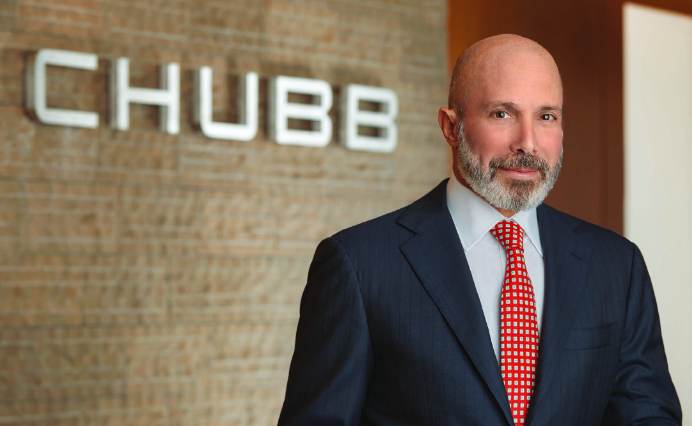 “I don’t have a crystal ball, and I cannot prognosticate where inflation actually goes from here in terms of rate and to which goods and products. Any increase in inflation is fundamentally tariff related, and that’s a moving target and a chaotic picture at the moment,” said Greenberg, speaking during Chubb’s Q1 2025 earnings call on claims inflation related to the ongoing trade war.
The CEO explained that this is the type of thing Chubb can stay on top of so long as the firm is watching early data around goods and labour costs related to physical property, construction, reconstruction, infrastructure, and so on.
“When it comes to catastrophes, well, you’re asking me for a crystal ball view. There is a natural volatility around cat. You’re never going to hit what you price for exactly, which is what the AALs are, and what you’re expected is in a quarter, it’s either above it, it’s below it, it moves around. And whether one year is going to be heavier than the year before, which for us was lighter last year and the year before that, who knows?” said Greenberg.
Discussing tariffs more broadly, Greenberg explained that tariffs and the federal budget deficit “impact interest rates, yield curve, spreads, asset values, and the dollar in ways that are not good for our country.”
“As a company, we are predominantly buy and hold fixed income investors and benefit from higher yields. And as a multinational, our revenue and income benefit from a weaker dollar,” he continued.
In terms of underwriting, Greenberg noted that Chubb is “mindful of the potential impact tariffs could have on short tail lines of business and are watching closely.”
Expanding on this and the magnitude of the loss trend impact of tariffs, Greenberg underlined the importance of avoiding guesswork.
“You want to underwrite with facts, and you don’t want to anticipate with conjecture, unless you have clarity around your conjecture. If you have 70 or 80% certainty, as an example, then we would take a certain view. There is no clarity, it is a moving target.
“The administration has an objective to reach trade agreements for 90 days with a large number of countries. What will that mean in terms of tariffs going forward? It’s unclear,” said Greenberg.
On demand for insurance, the CEO warned that if tariffs remain high, demand will be hit, but how that influences inflation is again uncertain.
“When I think about property insurance today, and I think about the current accident year this year, keep in mind, the loss ratio is developed on an earned basis. So, a lot of it has already been written, it’s already being earned, it’s already in the can. There you go. As you go forward, on a written basis, and as months go along, if we see a change in inflation, the markers that will, in fact, change inflation, we will adjust our pricing,” he said.
Adding: “Go one step further, imagine on the physical side, how much comes from Mexico and Canada, as an example, as influence, what will happen in terms of tariffs in North America? In terms of USMCA negotiations?
“So, on the claims side, all of this is on our minds as we measure the change in price of goods, the flavour. And all of it is on our minds as we watch negotiations that will ultimately lead to a more steady and clear environment around what will tariff levels actually be and apply to what goods.”