Destructive flooding recently caused by hurricane Helene highlights an increasing flood risk for local economies and tax bases, notably across the Eastern and Southern United States, says Moody’s Ratings.
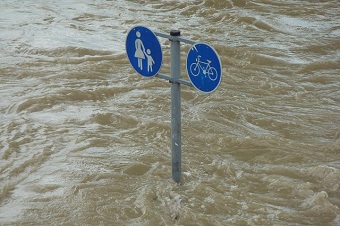 However, according to analysts, as coastal and inland flooding events are beginning to become more frequent and severe, this growing hazard poses major credit challenges, including rising property insurance costs, declining property values, and the need for extensive investment in climate adaptation infrastructure,
It’s no secret that coastal communities across the Eastern and Southern US have long faced hurricanes and related extreme rainfall, wind and storm surge, and have taken many steps to prepare and mitigate sea level rise effects. But now, inland areas are increasingly experiencing major flooding events too, as changes in land use over time, combined with the growing number of extreme rainfall events, have led to an increase in annual flood losses.
Alarmingly, Moody’s notes how property value is underinsured for flood risk, which exposes tax bases to risk of economic disruption and decline.
Analysts said: “For many households and businesses, a combination of insurance and federal disaster aid serves as the primary sources of funds to repair and rebuild following a natural disaster that causes significant property damage. However, while standard property insurance covers most perils, it does not cover flood damage.”
Adding: “Most property in the US does not carry flood insurance, even in areas highly exposed to flood risk. As a result, the ability of a region to bounce back from major flooding disaster events is reliant on continued demand for property in the impacted area, which may erode as building replacement costs and insurance premiums continue to rise, or as the incidence of flooding disasters increases.”
Analysts also went on to note that while much of the US faces a moderate to high, and increasing, risk of flood, less than 5% of residential property across the vast majority of counties nationally maintains flood insurance.
In fact, even in the highest-risk coastal areas along the Gulf Coast and Eastern Seaboard, flood insurance uptake rates range from 10%-30%. While commercial property usually tends to have a much higher flood insurance uptake rate, but this is still generally around 50% of properties and up to 75% or more in a few high-risk areas.
Moreover, larger corporations tend to have higher uptake rates, and often supplement National Flood Insurance Program (NFIP) coverage with private insurance policies, while small and medium-sized companies remain underinsured for flood risk, analysts added.
It’s important to highlight, that NFIP policies have declined from a peak of 5.7 million to 4.7 million as of September 2024, nearly a 20% drop, with only a modest uptake in replacement policies from the private market.
Readers will recall, that the US Federal Emergency Management Agency (FEMA) recently said that Helene could drive NFIP claims of up to $7 billion, including loss adjustment expenses, with more than 55,000 flood loss claims reported to the NFIP as of November 7th, 2024.
Furthermore, Moody’s explained how the pervasiveness of flood risk presents a new variety of challenges and some uncertainty surrounding the future of tax base resiliency in highly exposed areas.
“Given the general lack of flood insurance, most property owners rely on federal aid, which will cover only a fraction of
costs, leaving homeowners to pay out of pocket for repairs. Lack of sufficient funds will force many homeowners to use debt to pay for repairs or to sell at distressed prices, or will lead to business closures. Over time, places that routinely experience flooding may see a reduced demand for property or at least reduced pricing relative to homes or commercial properties on higher ground or that are built with the latest building codes and are more resilient,” analysts said.
The firm concludes by explaining that varying levels of governments are working on solutions to both protect property and livelihoods, as well as the growing insurance gap.
Some of the ideas that are currently being tested include broadened flood insurance requirements or flood insurance mandates, as well as different delivery models for flood insurance coverage, like parametric or community-based insurance, more federal or state aid to cover gaps in insurance payout versus actual costs or mitigation projects, and continued federal investment in either home resiliency or property buyouts.
As well as this, a number of states across the US are also adopting greater disclosure requirements in real estate transactions regarding past incidents of flood, and private companies are beginning to roll out more tools to help prospective buyers understand flood risk.
“All of these solutions carry a cost, and may make living in flood-vulnerable areas less affordable and less desirable, negatively impacting property values, local economies, and government tax revenues relative to lower risk areas,” Moody’s concluded.