Insurers are seeking to get closer to their distribution partners and become easier to do business with, enabling them to attract more submissions, respond faster, and gain better insight into the risks they are selecting, a shift that Applied Systems, through key divisions such as Ivans and Cytora, is well positioned to support.
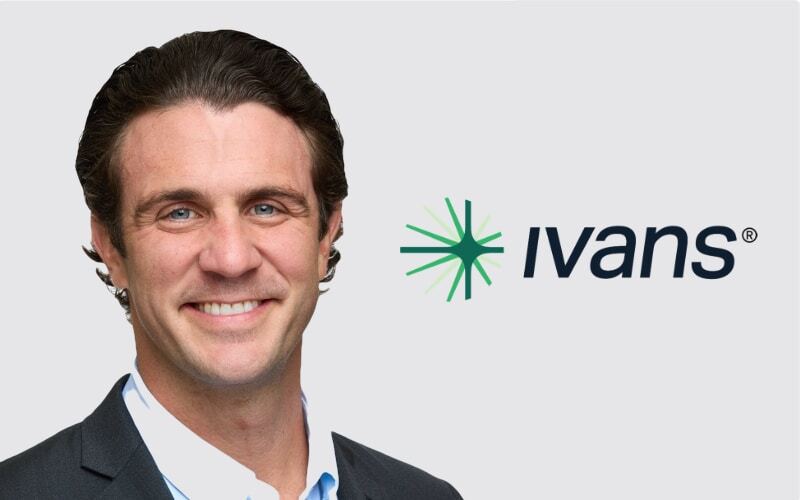 In an interview with Reinsurance News, Michael Streit, President of Ivans, a provider of automated connectivity services for the insurance industry, said carriers are increasingly focused on reducing friction in broker interactions, particularly in commercial submissions where processes remain highly manual.
He explained, “The place we have struggled as an industry is on commercial submissions. Going from an insurer to a broker, to an underwriter, there’s still a ton of friction in that process, and we see that in a couple ways. One is it’s just not happening in systems; it’s happening in email, it’s happening in phone calls, and it’s difficult for us to affect change on a process that’s happening outside our systems.
“Second, when we talk to carriers, we hear two things. One is that they’re desperate to get closer to their distribution partners, they want to be the ones that are easiest to do business with. They know that if they can be easiest to do business with, they will see more submissions, they will close those submissions faster, they will get a better view into the risk that they’re selecting to build their portfolio. They want to get closer to distribution, and we feel it’s our job to help them do that.”
Streit highlighted that large language models (LLMs) are removing the trade-off in commercial lines by allowing massive automation and efficiency without forcing standardisation.
“The advent of LLMs is removing a trade-off that has existed. In the past, if we wanted to drive efficiency and automation, we told the ecosystem that we can do that, but you have to standardise, because we can’t automate something that’s bespoke everywhere.”
He explained that while standardisation works for personal lines, for most commercial lines it is a trade-off carriers are not willing to make.
“Now, LLMs are allowing you to drive massive automation and efficiency without forcing standardisation. That, to me, is the biggest change we’re seeing in the industry, and honestly, it’s a change we’re anxious to bring to life,” said Streit.
In terms of operational strategy, Streit noted that insurers can now drive efficiency in areas where they couldn’t before, specifically through Cytora, a digital risk processing platform for the insurance industry that Applied Systems acquired in September 2025.
“So, let’s take an example of a real customer. Previously, they would ingest a bunch of submission information and collect it through a series of emails, responses, phone calls, and handwritten notes, then ship it overseas—either in-house or to a BPO—who would manually enter the information into the underwriting workbench, inform the underwriter that the risk is ready to be evaluated, and by the time they got a response back to their carrier or broker partner, it had been weeks,” he said.
“When that happens, first of all, you’re not going to win as many risks as if you’re first on the glass. And second, the ones you do win are probably the ones you don’t want because they’re bad risks.”
Streit continued, “So what happens now is, instead, they ingest it with Cytora. Cytora digitises it, and all that work that used to go to a BPO overseas is now happening agentically. And they can get a quote back to the carrier or the broker the same day, so their win rate goes up and they’re able to be more selective.”
He described this as “phase one,” an early step in the maturation process. He said insurers are now increasingly looking to pull that automation into management system workflows and brokers’ workflows, a process Applied is helping them do.
Streit also explained how insurers are moving toward a more connected, end-to-end operating model, partnering with distribution partners to connect communications more effectively.
He explained, “The systems are now more capable of talking to each other and working together than ever before. The beauty of the infrastructure or architecture is that it’s no longer necessary to have one single platform to do these things. Cytora is built to drive a lot of automation. It could drive an entire end-to-end workflow, but it can do that by using something they call skills and tools. In a modular way, it can call a different set of instructions, which could be as simple as a Word document explaining underwriting guidelines, or something more sophisticated like other agentic systems working in other parts of the infrastructure.
“So, architecture can be more modular, and therefore the burden of starting to drive automation in either the whole process, end-to-end, or particular steps, is much more accessible than before, when decisions were very linear and rigid, and more RPA than agentic.”
Streit also pointed out that insurers are prioritising investment in artificial intelligence (AI).
“Some of the biggest insurers in North America have been very vocal about spending billions of dollars on AI technology,” he stated. “The area where they continue to invest is how to get closer to their distribution partners. And that’s the area where we’re focused. They’re spending a lot of money on technology in general, but the area where we see it the most is: what are the ways I can spend money, and invest to make the interaction with my brokers as easy as possible? Because I know that when I do that, I can see more volume, close more volume, and be more selective with the risk that I’m taking in.”
Streit observed that carriers have been building pieces of AI solutions internally, often focusing on one line of business to replicate capabilities like those offered by Cytora.
“They take a while to do it. It works great, but as a big insurer, they’ve got a ton of other things to be thinking about. They’ve got a great solution, and it’s already 12 months late versus what they could buy from somebody like us, and they’ve done only one line of business. A lot of times we see carriers do that, and then they come to us and say, ‘Okay, this is harder than we realised, you guys are the experts in building these workflows, we’re going to outsource part of this to you.’ Then there’s always a spawn conversation where they say, ‘We have our own point of view about the following, we have our own specific underwriting guidelines we use, and we have a very unique process by which we have field agents who we want to empower to actually do the underwriting.’ We say, no problem. Think of us as a platform upon which to build. We’re big into ‘buy to build.’ It’s not buy versus build—it is buy to build. That’s a dynamic we’re seeing play out,” said Streit.