Insurance could provide a cost-effective method to help conserve and restore mangrove forests as a way to protect against coastal flooding, according to a report supported by AXA XL.
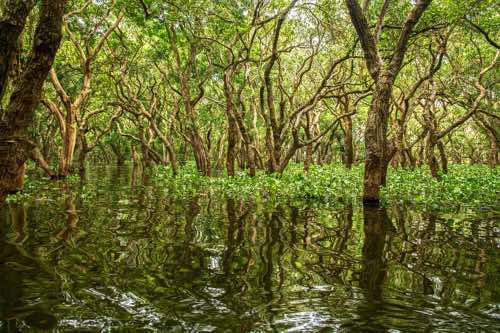 The report, published by The Nature Conservancy and University of California, Santa Cruz identifies 3,000 km of coastline across 20 states, territories and countries in the Caribbean region where post-storm mangrove restoration could be paid for by insurance and other mechanisms.
This could provide flood protection benefits that significantly outweigh the cost of mangrove rehabilitation.
Although the US and Bahamas have the most robust insurance markets, mangrove forests’ protective benefits are also significant in the Dominican Republic and Jamaica due to their high population densities.
The report points out that mangroves protect 15 million people globally from flooding and also reduce flood damages by $65 billion every year.
The first 100 meters of mangroves forests can be particularly critical, as they can lower wave heights by as much as 66%.
The report suggests that a parametric insurance policy based on wind speed is most feasible and could be paired with a traditional indemnity policy to cover both short-term and longer-term restoration actions.
Chip Cunliffe, Director, Sustainable Development, AXA XL, said, “As part of our Ocean Risk Initiative, we’re looking to develop insurance and finance products that incorporate nature-based solutions – including mangroves – to help close the protection gap and build resilience at local, regional and global levels.
“AXA XL is an innovator in this field, and in line with AXA Group’s focus on climate and biodiversity, we are using our risk management expertise to look for new ways to reduce community vulnerability to coastal flooding, which is expected to increase as sea levels rise. A specific mangroves solution could provide effective protection to coastal communities.”
Professor Michael W Beck, of the University of California, Santa Cruz added, “With increasing sea levels and waves, more communities will be exposed to impacts from extreme weather. Mangroves provide a cost-effective first line of defence protecting people and property from these hazards.”