Insurance carriers operating in Hawaii have sufficient capital and appropriate reinsurance programs in place to effectively absorb losses resulting from Hurricane Lane, which battered Hawaii with floods and landslides last week, according to A.M. Best.
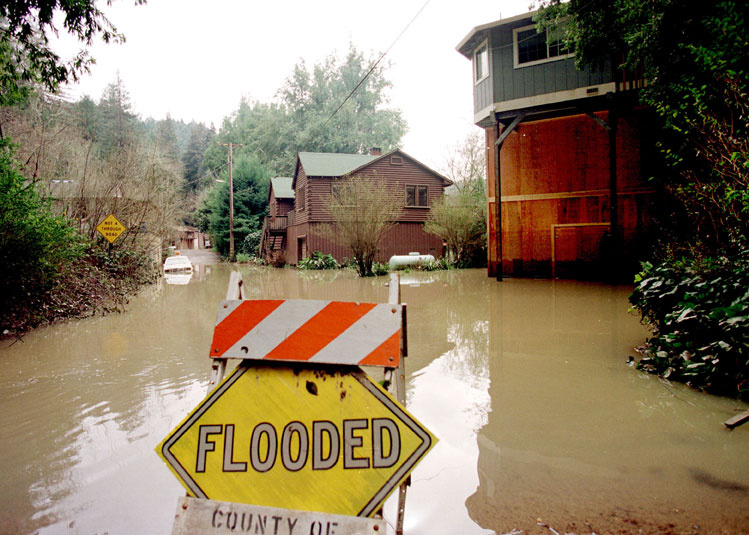 While Hurricane Lane never quite made direct landfall on Hawaii, it brought over 50 inches of rain to some parts of the island chain over August 22-26 and is expected to generate significant insured flood losses.
A.M. Best explained that it did not anticipate any significant decreases in policyholders’ surplus given that most Hawaiian insurers exposed to property catastrophe risk tend to have diverse geographic footprints and possess risk-adjusted capitalisation supportive of their current ratings.
While it does not expect any rating actions, A.M. Best also warned that any entities displaying material deviations from expected results could be subject to negative rating action in the form of under reviews, outlook revisions or downgrades.
The National Flood Insurance Program (NFIP) is also expected to absorb a considerable amount of the losses resulting from Hurricane Lane, as it has about 60,000 policies in force in Hawaii as of September 2016, according to the U.S Federal Emergency Management Agency (FEMA).
This is limited compared to the NFIP’s exposure in Florida (1.7 million policies) and Texas (608,800), although A.M. Best maintains that Hurricane Lane losses will “increase the probability of the NFIP utilizing its reinsurance program for a second consecutive year” when considered alongside “other recent and prospective events.”
However, this seems unlikely given that the $1.46 billion of reinsurance that the NFIP secured at January 2018 will only “indemnify FEMA for flood losses from individual flood events (as opposed to aggregate losses from multiple flood events,” with losses in excess of $4 billion, according to FEMA.
Additionally, the recent $500 million of reinsurance that the NFIP secured through the issuance of its FloodSmart Re 2018-1 catastrophe bond only indemnifies FEMA for a portion of flood claims that result from a single flood event with losses in excess of $5 billion.
As losses from Hurricane Lane are unlikely to be high enough to trigger the NFIP’s reinsurance program alone, and as the coverage relates only to single events, it should not increase the likelihood of the NFIP triggering its reinsurance program this year.
In 2017, FEMA recovered the full $1.024 billion under its flood reinsurance program for the NFIP for losses relating to Hurricane Harvey, although it also paid out a total of $7.6 billion to policyholders as a result of Harvey.
Accounting for both its January 2018 reinsurance placement and its August 2018 catastrophe bond, FEMA has transferred a total of $1.96 billion of the NFIP’s flood risk for the 2018 hurricane season to the private sector.