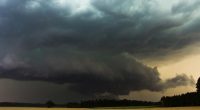
CCRIF SPC (Caribbean Catastrophe Risk Insurance Facility Segregated Portfolio Company) has paid The Government of Panama $26.7 million within two weeks of a rainfall event that affected that country from October 31st to November 4th, 2024.
 Francisco Álvarez, Director at the Directorate of Investments, Concessions and State Risks (DICRE), explained that the CCRIF coverage is part of the national strategy to protect the country against natural disasters.
Backed by a cabinet resolution, the strategy includes disaster risk financing tools for risk transfer and retention to protect the country’s economy financially.
The Government also has contingent credit lines from the World Bank and the Inter-American Development Bank. Panama holds two CCRIF policies for excess rainfall and one policy for earthquakes.
According to reports, the event caused landslides, flooding, fallen trees, the collapse of some bridges, and the loss of crops in some areas. Approximately 1,500 people were negatively affected, and 11 have lost their lives due to heavy rains this month.
Álvarez commented, “Parametric insurance allows the State to respond quickly to emergencies caused by phenomena such as excess rainfall, mitigating their fiscal and social impact.”
CCRIF can provide payouts quickly due to its parametric insurance policies, which makes payments based on the intensity of a natural hazard event, the exposure or assets affected by the event, and the amount of loss caused by the event, calculated in a pre-agreed model. This enables the CCRIF to not wait for countries to make claims based on an on-the-ground assessment of loss and damage and can disburse funds quickly to members if their policies are triggered.
Speaking at the 29th Conference of Parties to the United Nations Framework Convention on Climate Change (COP 29) in Baku, Azerbaijan, CCRIF Chief Executive Officer, Isaac Anthony, reiterated the role of CCRIF and its parametric insurance products as a loss and damage strategy, “Whilst countries implement several climate adaptation strategies to enable them to better cope with climate-related events, there is also loss and damage as a result of climate change that they must contend with. Loss and damage refers to those negative effects that occur even after current adaptation efforts.
“A key disaster risk financing instrument for addressing loss and damage is parametric insurance. Parametric insurance covers more than physical damage; it also covers economic exposure, thereby helping governments so they do not need to halt social and development programmes to address immediate needs post-disaster.”
In the last five years, CCRIF members have been routinely ceding over $1 billion in insurance coverage to CCRIF. For the policy year 2024/25, total coverage purchased by CCRIF members increased by 10% over the previous policy year.
In 2020, following Hurricane Eta, Panama received a payout of $2.7 million from CCRIF, which was used to provide humanitarian aid to affected people and communities, repair access roads to communities affected by landslides, and provide assistance to farmers who lost their crops as a result of flooding.
CCRIF added, “Parametric insurance is not designed to cover all the losses following a natural disaster, but it plays a key role in closing the liquidity gap by providing governments with access to financial resources to respond to the immediate needs brought about by the disaster.”
These two payments to the Government of Panama bring to 13 the number of payouts that CCRIF has made this policy year, which started on June 1st, 2024. CCRIF paid $6.4 million to the Government of Guatemala following a rainfall event in June and 10 payouts of $84.5 million following Hurricane Beryl.
Since 2007, CCRIF has made 75 payouts of approximately $358.5 million, with the latest payout to Panama bringing the total to 77 payouts, totalling $385.2 million.