War risk insurance for vessels transiting the Persian Gulf and Red Sea remains available, although insurers are reassessing their appetite for exposure as tensions in the Middle East disrupt shipping routes and threaten supply chains, according to the International Union of Marine Insurance (IUMI).
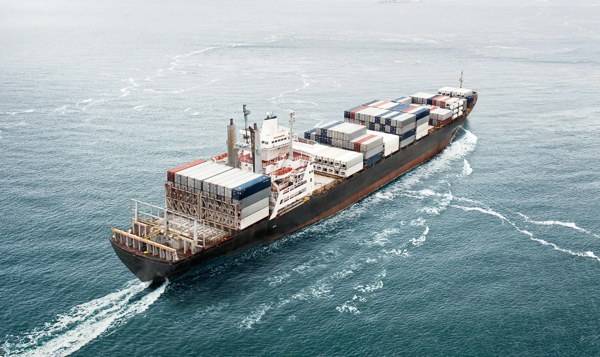 The marine insurance body said war cover would continue to be granted on a single-voyage basis, subject to specific agreement, as long as navigation is authorised by governments and flag states.
However, insurers are closely monitoring developments and may adjust terms as the security situation evolves.
“The granting of war cover for the Persian Gulf and Red Sea is and will remain available under specific agreement on a single voyage basis as long as navigation is authorised by governments and flag states. In the current fast-paced situation, insurers will regularly re-examine their ability and willingness to provide cover,” the IUMI explained.
The marine insurance body continued, “By way of explanation – in circumstances such as these, some insurers will serve a Notice of Cancellation in relation to the cover their assureds have in place.
“This is to enable the insurer to reassess the risk and then reinstate the cover at adjusted terms. It is important to recognise that a Notice of Cancellation does not, necessarily, end the cover. War cover remains available for owners and operators wishing to take it.”
IUMI said it and the wider marine insurance community are closely monitoring the situation in the Middle East, particularly the safety and free passage of shipping through the Persian Gulf and Red Sea.
“As with all shipping interests, the safety of seafarers will be a priority for owners,” IUMI added.
The marine insurance body also noted that a number of vessels are currently trapped in the Persian Gulf, with many operators re-routing ships to avoid high-risk areas.
“Insurers will be mindful of the impact this might have on accumulations at nearby ports as well as on the vessels and crews as they navigate longer sea routes. We are likely to see disruptions to supply chains in the short-term, as a result,” IUMI added.
Earlier this week, in an intervention aimed at stabilising global energy flows and easing maritime security risks, President Donald Trump directed the United States Development Finance Corporation (DFC) to extend political risk insurance and financial guarantees for all maritime trade, particularly energy cargoes transiting the Strait of Hormuz.
Trump stated that the DFC would offer these guarantees at a “very reasonable price” to all shipping lines, effectively creating a federal backstop for a region currently deemed too volatile by many private insurers.
He added that, “if necessary, the United States Navy will begin escorting tankers through the Strait of Hormuz as soon as possible,” reinforcing his government’s objective of maintaining an uninterrupted global energy supply chain.
Morningstar DBRS, the international credit ratings and research firm, later said the proposal may not be sufficient to restore commercial navigation in the region rapidly.