The Caribbean Catastrophe Risk Insurance Facility (CCRIF) will make payouts totalling around US$44 million to the Government of Grenada following the passage of Hurricane Beryl, which triggered all of the company’s parametric policies for the country.
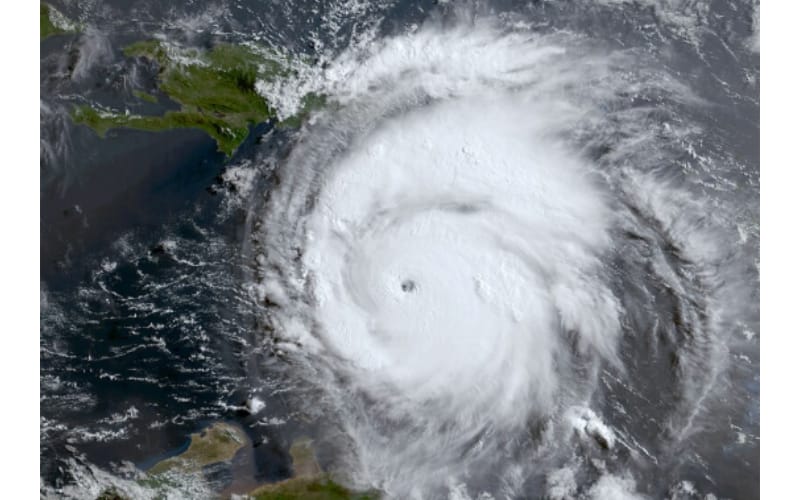 Hurricane Beryl devastated 90% of all buildings – the airport, marinas, gas stations, the hospital and homes – on the islands of Carriacou and Petite Martinique – two of the sister islands that comprise the State of Grenada.
The agriculture sector also suffered significant damage, as well as the natural environment, including mangrove ecosystems, and electric utilities, mainly the transmission and distribution systems on both islands.
The North of Grenada was not spared, with Beryl causing damage to homes, the agriculture and forestry sectors, and electric utility transmission and distribution and water distribution systems as well.
According to CCRIF, all of its parametric insurance policies for Grenada have been triggered following the passing of Hurricane Beryl.
These policies make payments based on the intensity of an event and the amount of loss calculated in a pre-agreed model caused by these events.
At USD$42.42 million, the payout to Grenada on its tropical cyclone (TC) policy has become the single largest payout by CCRIF.
Until now, Haiti had the single largest payout from CCRIF, having received just under US$40 million, following the 2021 earthquake.
The other payouts include USD$1.06 million for the COAST (fisheries sector) policy and USD$548,850 for the Excess Rainfall policy.
CCRIF CEO, Isaac Anthony commented: “These payouts represent Grenada’s first payouts from CCRIF. I commend the Government of Grenada, which has always maintained that despite not receiving a payout, it understood the importance of financially protecting the economy in case a disaster strikes, as it would never want to see a repeat of Hurricane Ivan”.
He added: “Countries ought to treat parametric insurance for natural hazards like they treat health insurance. We buy health insurance because it is important to help safeguard our lives. However, we hope we do not need it but when we do, we have the peace of mind that it could help us deal with a more serious illness than a common cold.
“Similarly, we do not want to be negatively impacted by natural hazards and be faced with natural disasters. However, in the case of CCRIF’s parametric insurance, the moment we really need it, it is available within 14 days of a triggering event. CCRIF’s parametric insurance must be seen as a key component in helping countries to build back better and stronger to withstand future natural hazards, especially within the context of climate change”.
The CCRIF is also to make a USD$16.3 million payout to Jamaica as its Tropical Cyclone policy was also triggered by Hurricane Beryl.
At this time, it’s not known whether Jamaica’s excess rainfall parametric insurance from the CCRIF has also been triggered.
The CCRIF is expected to make 10 payouts under Beryl totalling over US$75 million in the next few days, thereby taking payouts to approximately US$350 million.
The Government of St. Vincent and the Grenadines will receive US$1.8 million, and the Government of Trinidad and Tobago will receive US$372,752 for the impacts of Beryl on Tobago.