The Insurance Council of New Zealand (ICNZ) has challenged the expectation that re/insurers or the government should return properties to the condition that they were in before being hit by disasters.
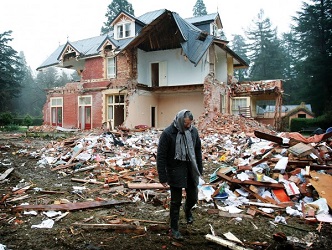
Canterbury Earthquakes, source: APN PRESSPIX
Speaking with Insurance News, ICNZ’s CEO, Tim Grafton, said that a national conversation was needed across New Zealand to address the practicality of this policy.
“The expectation among New Zealanders is that they be returned to their pre-catastrophe state after an event and that it is either covered by the private market or by the government,” Grafton told the publication.
“While we enjoy very high levels of insurance penetration, and a very low protection gap which is a very good thing to have, there is no other country I know of where there is that guarantee in place,” he noted.
“The question is how realistic is that, how sustainable is that, when we are going to be living in a world where there will be increased risk due to climate change, increased frequency of extreme weather event losses as well as underlying seismic risk?”
“We need to be reducing risk and maintaining the affordability of insurance,” Grafton continued.
“Therefore there needs to be a wider debate around what it is that we all as a society and individually contribute to reduce that risk, because the focus is on assuming that all risk will be fully covered either by the private sector or by government. And that is not realistic.”
Lloyd’s has previously ranked New Zealand as the second-most exposed to natural catastrophe losses, and the ICNZ’s comments come amid a public inquiry into the Earthquake Commission’s response to the Canterbury quakes.
“The Government needs to sit back and say what its tolerance for risk is, what it will take and what it believes is the amount it needs to be providing to citizens through the EQC – but the EQC does not cover a lot of the climate change events,” Grafton told Insurance News.