The legacy re/insurance market continues to evolve, with a growing shift towards purely capital relief structures that are increasingly complex and require creative, patient, long-term partners, according to Rachel Bardon, Chief Underwriting Officer (CUO) at Compre.
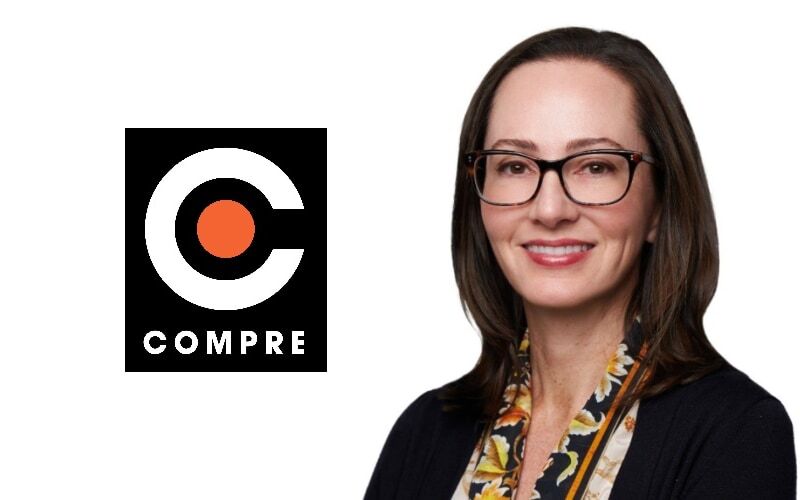 In an interview with Reinsurance News during our visit to Bermuda, Bardon discussed the current state of the legacy market.
She explained, “We’re noticing more complex transactions. Traditional deals historically involved discontinued business where clients want to end all claims management—they are still common. However, we’re now seeing more purely capital relief structures, which are notably more intricate.
“Before I joined Compre, I was more familiar with the traditional methods of capital relief like collateralised reinsurance and sidecars. But these renewable legacy capital relief structures – such as cancel and replace for new accounts, are a unique form of surplus capital. I think there is going to be increasing complexity and the need for creative, patient, long term partners in the legacy space.”
Bardon also said she expects increased involvement from third-party capital across the Property & Casualty insurance market, noting that such capital will require clear exit solutions and that legacy is well placed to become increasingly involved in helping third-party capital get comfortable with these longer-duration assets.
She continued, “I anticipate a greater focus on establishing long-term partnerships and identifying ways to support additional collaborative efforts.
“There’s also this concept of providing solutions across the whole lifecycle of an exposure, and I think our participation on the prospective side helps to facilitate that as well.”
In addition, she highlighted the significant growth potential in the US legacy market, while emphasising that it is more complex and requires patience.
“Compre’s legacy has historically been European-focused, but in recent years we’ve expanded into the US. Whilst Europe remains central to our strategy, US involvement is increasing. The US market is and more complicated, with greater uncertainty due to its judicial system, evolving statute of limitations, and 50 different state regulators approving transactions. So you have to be very patient.
“There is an opportunity for cedents in the US to transfer some of their potential adverse development; however, this can lead to a bid-ask spread that sometimes has difficulty being bridged. There are ways around that where it does require some creativity, so getting the cedent comfortable, and ensuring that if their reserve pick is correct, they’re going to benefit from that. But if our reserve pick is correct, we’re not going to be adversely hurt by that. Using creative mechanisms like corridors and experience accounts is really important,” said Bardon.
Looking ahead, Bardon reiterated that demand for capital relief structures is likely to increase in the next few years, alongside continually figuring out how legacy can work alongside third-party capital in prospective deals such as sidecars.
“I think that there’s an expansion of opportunities for legacy players to participate in more and different types of transactions than there has been historically,” said Bardon.