In a statement accompanying the firm’s annual report, Patrick Tiernan, CEO of Lloyd’s, described the future of the market’s infrastructure as an ecosystem of intelligent solutions, built on common data standards and interoperability, with a new strategy designed to “raise the bar” and remove the friction that constrains performance.
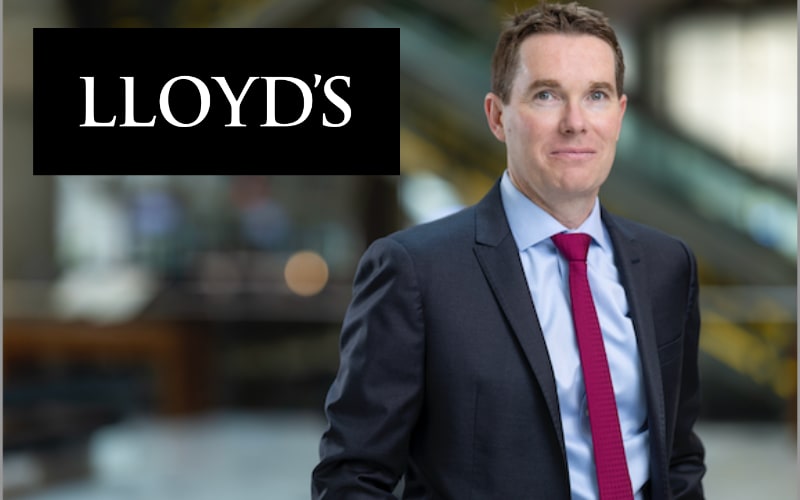 Fully detailed in the report, Lloyd’s new strategy aims to strengthen its financial edge and advance its ambition to be the preeminent global marketplace for insurance risk.
The strategy has been articulated following the decision to sunset certain elements of Blueprint Two’s original vision, which, according to Tiernan, did not deliver the benefits initially anticipated.
“Existing not to avoid risk, but to enable those who take it on – no matter how complex, global or new. We seek to attract the very best – be they underwriters, brokers, capital providers or customers; those who will lead solutions, pricing, terms and conditions, but also those who embrace our standard of excellence,” Lloyd’s explained in its annual report.
Tiernan added that while at the helm, his firm will foster a faster, simpler operating environment, informed by principles-based oversight, clearer reporting and more predictable decision making.
Outlining the four drivers of the new strategy, the CEO said, “First, leading underwriting performance. Sustainable profitability through-the-cycle remains the primary measure of success. We will promote expertise and underwriting discipline, while remaining bold in embracing nascent risks.
“Second, building a more efficient marketplace. We will reduce friction, lower costs and create predictable, risk-based oversight so that capital and talent can move at pace.
“Third, maximising our capital advantage. Our unique structure allows more risk to be taken per unit of capital than elsewhere. We will protect and deploy that advantage to increase returns for the same level of risk.
“Fourth, creating a Lloyd’s to be proud of. Focus, innovation and talent are not soft ambitions. They are competitive necessities. We will invest where we can increase return or relevance, and we will stop doing what does not.”
Tiernan explained that the strategy’s implementation will be phased and deliberate, with Lloyd’s prioritising initiatives that offer clear economic benefits and executing changes within defined time horizons.
He continued, “The future of the Lloyd’s market infrastructure is not one platform, mandated across hundreds of market participants – each with different strategies, priorities, systems and vendors. It is an ecosystem of intelligent solutions, built on common data standards and interoperability.
“We remain committed to supporting the re-platforming of the market to a resilient, cloud-based operational infrastructure, increasing operational resilience and reducing costs. This must be done on a phased basis with minimum disruption to the market.”
Tiernan observed that while Blueprint Two was a courageous undertaking, and the firm learned a great deal, the project has not yielded the benefits that were originally envisioned.
Tiernan went on, “We have, therefore, taken the decision to sunset some of the project’s original vision. The technology being deployed by market participants has advanced markedly since Blueprint Two was first conceived.
“Lloyd’s has a critical role to play in setting standards and organising data. Where we have data that is useful, we will share it with the market.
“We have a clear understanding of our role as a minority shareholder in Velonetic. We will work closely with Velonetic – alongside our counterparts at DXC and the IUA – as it moves forward with its revised plan.”
In response to the announcement that elements of Blueprint Two are being sunsetted, industry leaders have weighed in on what the shift means for the London insurance market.
Executives across market bodies and technology providers have highlighted both the lessons learned from the initiative and the opportunities for more practical, incremental approaches to modernising infrastructure and improving operational efficiency.
Chris Jones, Chief Executive of the IUA, commented on the news, “The original Blueprint Two programme was an extensive set of work that sought to fully digitise the London insurance market.
“That this has not yet been comprehensively achieved reflects the ambitious nature of the initiative. There have been some notable successes, however, including the establishment of core data standards, and these can be utilised going forward.
“The IUA will continue to work with its partners to improve market processes in the light of new technological advances, whilst ensuring that existing infrastructures are robust and supported.
“This will always be a collaborative effort, involving technology providers, carriers, brokers and Velonetic, which continues to provide critical services to our market.
“As a Velonetic shareholder, we are directly involved in developing effective governance for a new approach to digitisation that progresses on an incremental basis and minimises implementation risks.”
Ben Rose, Co-Founder and President of Supercede, the reinsurance intelligence company, said, “There won’t be a void if Blueprint Two disappears. The market has already voted with its feet. What participants want now are tools they can actually use today, not another decade-long transformation. The industry has shown it will embrace technology when it improves decision-making without forcing wholesale change.
“The real success story has been the Lloyd’s Lab. By opening the door to multiple technology providers, it has delivered better tools, more choice and faster progress. Market participants can adopt solutions that work for them, rather than waiting years for a single transformation to arrive.
“The lesson from Blueprint Two is that the industry doesn’t need another moonshot. It needs tools that make everyday decisions clearer and faster. Incremental improvement across the market will ultimately move the dial far more than one enormous programme ever could.”
Christopher Croft, LIIBA Chief Executive, added, “Replacing the core systems at the heart of the market was always going to be a difficult task — the IT we rely on today is the product of decades of evolution, not a simple upgrade. Delivering a new, multi-lateral settlement engine and a modern carrier back-office that truly supports a subscription market is technically complex and operationally demanding.
“That said, the work remains essential. The continued delays make it understandable that Lloyd’s and the market bodies should take time to re-examine how best to achieve the outcomes we all need.
“If we are honest about the lessons of the last 25 years, we must ask whether very large, set-piece, cross-market programmes – competing with firms’ everyday priorities for scarce expert resource – are the most effective route. A fresh approach should consider smaller, modular builds, clearer commercial incentives and governance that drives delivery rather than perpetuates delay.
“This is now time to take stock and should be treated as an opportunity for radical thinking. The focus now needs to be on practical, market-led solutions that create genuine commercial pressure to finish the job – because the market cannot afford further drift.
“As George Foreman memorably put it: ‘Call me old, call me fat, but don’t forget to call me for dinner.’ We do not care about the moniker attached to this project – what matters to LIIBA and our members is that the vital work to replace obsolete core systems is delivered for the benefit of the market.”
In related news, it was announced earlier today that the specialist insurance and reinsurance marketplace generated profit after tax of £10.6 billion in 2025, an increase of $1 billion on the prior year, as gross written premiums rose by 4.2% year-on-year to £57.9 billion, reflecting new participation in the market and continued expansion by existing syndicates.