Despite 2017 catastrophe events resulting in one of the costliest years on record for insurers and reinsurers, the highly competitive and overcapitalised state of the market resulted in muted change, with a true tail event needed to potentially bring about more meaningful change, reports JMP Securities.
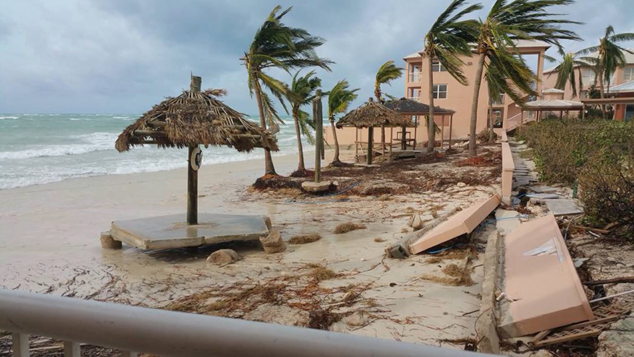 Forecasters and experts are calling for the 2018 Atlantic hurricane season to be slightly above average, and while this might suggest a greater chance of a landfalling event, and therefore a greater chance of re/insurance industry losses, JMP analysis suggests the correlation is “actually quite weak.”
Furthermore, and in a recent insurance industry note, JMP says that while an intense landfalling hurricane might well help to harden rates, “we believe it will be un/under-modelled losses and/or a significant increase in interest rates (and the impact that would have on the relative attractiveness of competing asset classes) that would have a greater impact on turning the market.”
Prior to the devastating catastrophe events that occurred in the second-half of 2017, the reinsurance market had endured a prolonged softened state, underlined by benign loss activity, intense competition and dwindling reserves, as well as dangerously low interest rates, all of which led to shrinking margins and falling profitability.
In the aftermath of the series of hurricanes, earthquakes and wildfires, reinsurers voiced hopes of significant rate increases at the January renewals and beyond, something that failed to materialise with the majority of the industry noting disappointing, albeit improved rates at renewals.
The reason for lower-than-expected and less-sustainable-than-expected rate increases has been largely attributed to the abundance of capital in the space, which includes the ever-expanding and influential glut of alternative, or third-party reinsurance capital.
Many alternative capital providers experienced their first major test and subsequently losses in 2017, but the permanence of the sector along with its willingness and ability to pay claims was realised as the market actually reloaded and expanded in size in time for the January renewals.
While this underlined the commitment of the capital markets to the re/insurance industry, it also limited any post-event price hikes, suggesting a flattening of the reinsurance market cycle going forward, something that’s been discussed numerous times across the sector.
In response to the rise of alternative capital, JMP says that traditional players have been reducing their wind exposure, especially in peak zones such as Florida. JMP notes that traditional reinsurers are either pulling back on the amount of property cat risk they underwrite, or buying more retrocessional protection.
“The decreased exposure means that if we have a significant landfalling event this hurricane season, reinsurers should be less exposed than they have been in past years,” says JMP, adding that as a result of the retro market being highly concentrated by a few large collateralized players, “a seemingly disproportionate share of industry loss could be concentrated in the hands of these providers.”
Ultimately, says JMP, 2017 showed that in the current market, more modest-sized events “will bring about little change on their own,” and instead it might well take a truly un/under-modelled event to really drive a turn in the market dynamics.