The reason that Munich Re has been able to perform well despite losses that are attributable to the war in Ukraine, ongoing inflation, and high market losses due to natural disasters, was portfolio diversification, according to Joachim Wenning, the Chair of the Board of Management.
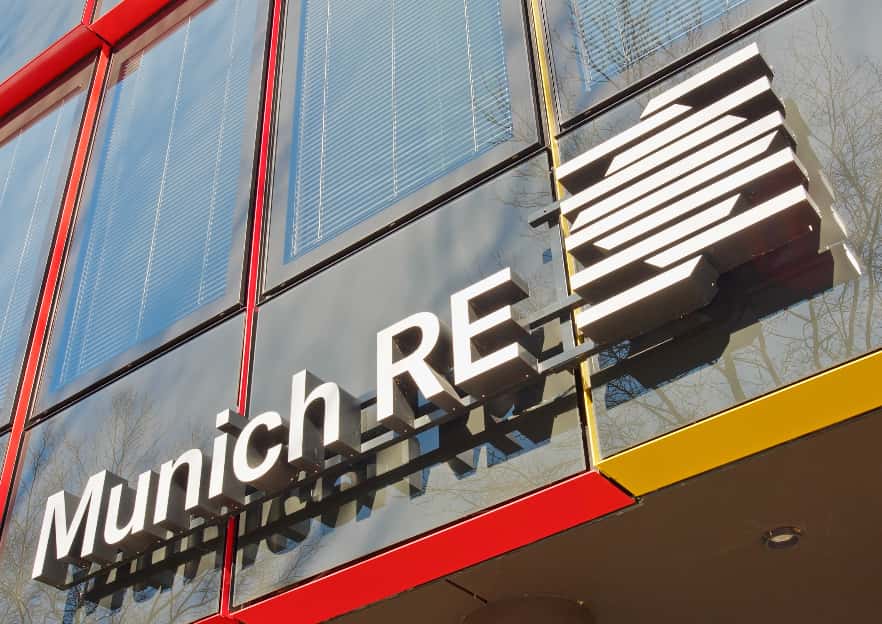 At the recent annual general meeting, Munich Re has approved its dividend proposal of €11.60 per share. The dividend share for the year 2021 was €11.00. The overall dividend payout amounts to about €1.59bn.
Addressing shareholders, Wenning commented, “With a profit of €3.4bn, we surpassed our expectations last year. The diversification of our Group provided the financial resilience against all the burdens that 2022 brought with it.”
He continued by stating that Munich Re intended to generate a net result of €4.0bn in 2023, based on the new IFRS 17 reporting standard. The company’s non-financial targets have also seen progress in decarbonising its investment and insurance portfolio.
Wenning expressed his continued satisfaction with the execution of the Ambition 2025 corporate strategy, “If we keep up the great work, by 2025 Munich Re will be more resilient, efficient, competitive and attractive to capital markets than ever before.”
The company was well on track to achieve its five-year targets, according to its reports.
Munich Re’s investment activities show that greenhouse gas emissions were 46% lower than in 2019, the base year for its Ambition 2025 plan. Its primary insurance and reinsurance business has also reduced emissions compared to baseline values by as much as 40% in, for example, property business regarding oil and natural gas production. In the fight against climate change, Wenning reiterated that greater government leadership was still needed.
Wenning stated, “Elected officials must take charge and be responsible for their countries’ energy supplies going forward. They must also assume responsibility for the pace, the costs, and specific steps in the transition to sustainable energy.”
He was also critical of increasingly substantial sustainability reporting requirements, saying that the continual development of increasingly extensive standards would be a considerable financial burden for companies, without solving the actual problem of rising emissions.