In the minds of the leaders of some of the world’s largest companies, there’s no doubt the transition to net zero will happen, but it’s important people understand the consequences of the steps, according to Christian Mumenthaler, CEO of Swiss Re.
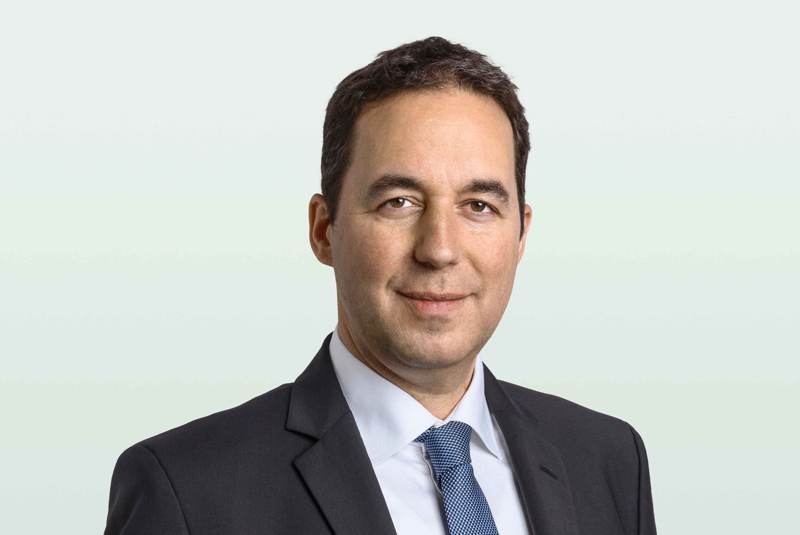 Speaking on a panel this morning at the Geneva Association’s 50th summit in Switzerland, Mumenthaler discussed sustainability and the re/insurance industry’s path to net zero.
The Swiss Re CEO is also the Chairman of the association and co-Chair of the WEF’s Alliance of CEO Climate Leaders.
“So, I have a bit of a sense of what’s happening overall in the business world right now, and it’s massive. I think there’s no doubt amongst this group that the transition will happen. The question is which speed but there’s no question that it will happen.
“And of course, double digit billions or triple digit billions are invested across value chains to make it happen. But I think what is important to convey, which many people don’t understand, is this concept of scope one, two, and three, and what the consequences are,” said Mumenthaler.
He explained that for insurers and reinsurers such as Swiss Re that claim to want to be net zero by 2050, scope one means they must be net zero in emissions in their own operations, scope two is the need to have 100% green energy, but scope three is where it gets tricky.
For many global companies, like Swiss Re, the large majority of their footprint is external, which is scope three – emissions associated with the company up and down its value chain.
“So, upstream is all of our suppliers. Swiss Re has 9000 suppliers, many of them are very small, hotels, florists etc. All of them will have to be net zero by 2050 otherwise they cannot service Swiss Re anymore.
“And this upstream scope three, this pressure is going to increase very significantly in the next few years, because all of these companies they’ve focused on themselves first, scope one and two, but now there’s going to start to be pressure in this network,” said Mumenthaler.
“All the companies out there who say this is not for me, I don’t do it, I don’t believe it, it doesn’t help them because there are big clients like Nestle who will stop using them, will put a lot of pressure on them.
“I think there’s going to be a shockwave, basically, sent through the network and the question is, of course, will there be pockets of people not affected by any of that? But I doubt that this is possible,” he added.
While there’s massive pressure on the upstream side, for re/insurers, Mumenthaler warned that it’s even greater on the downstream side – the assets firms hold and insurance they write.
“So, on the asset side by now, there’s ways to measure the footprint of the assets. And so, gigantic pools of money, typically long-term money, pension funds, insurance companies are starting to reduce the carbon footprint. There’s lots of discussion and pressure.
“Actually, one of the reasons companies move is because of the pressure from the asset side. And there’s a significant pot of pension funds and insurance companies who are more than a third, I think, of the worldwide assets and long-term holders of assets,” he said.
Although there is pressure on the asset side, Mumenthaler stressed that the solution is known, and it is relatively easy to scale down to net zero.
However, on the insurance side, the biggest issue is that there’s no accepted measurement methods, noted Mumenthaler.
“So, we say we don’t insure these, we don’t insure that but what we should do is be able to measure all sort of Co2 footprint for every insurance contract, and then do the same, we scale down on the path to net zero.
“We have started to develop it in the industry. For motor we have it, for corporate risks we have it, but many other risks we don’t. But this is a question of maybe two years and then we should be on a different path,” said the CEO.
Ultimately, this all means that Swiss Re will not be able to insure any organisation who is not on the path to net zero, and this includes corporations, of which the re/insurer insures more than 10,000.
“They will not have insurance unless they’re part of this system. So, you see how everything is interlinked. And the pressure has gone up. There’s much more movement in the last three, four years than before. And I think there’s no escape.
“This is not just about we invest in solar farms, or we insure solar farms, yes, we do that, tens of thousands, but that’s tiny. The real effect will come through this network effect that you have for this definition of scope three.
“So, it’s very significant and nobody’s going to escape, in my mind. I can’t see how any company can escape the pressure from the government and the pressures from these companies,” he concluded.
Mumenthaler’s comments come as world leaders meet in the UAE for COP28, the annual climate conference. It’s clear that the re/insurance industry has a key role to play in the climate fight and the transition to net zero, and it’s hoped that progress is made at this year’s event and concrete solutions come to fruition.