Zurich-based catastrophe insurance data provider PERILS has disclosed its fourth and final industry loss estimate for Typhoon Nanmadol, lowering it to JPY 125.9 billion.
 This latest figure compares to PERILS’ previous loss estimates of JPY 129.6 billion, released on 20 March, JPY 119.7 billion, released on 20 December, and JPY 113.5 billion, released on 1 November 2022.
PERILS states that in accordance with its coverage definition for Japan, this number encompasses only property losses sustained by the Japanese general insurance industry and does not include losses suffered by the cooperatives insurance industry (Kyosai).
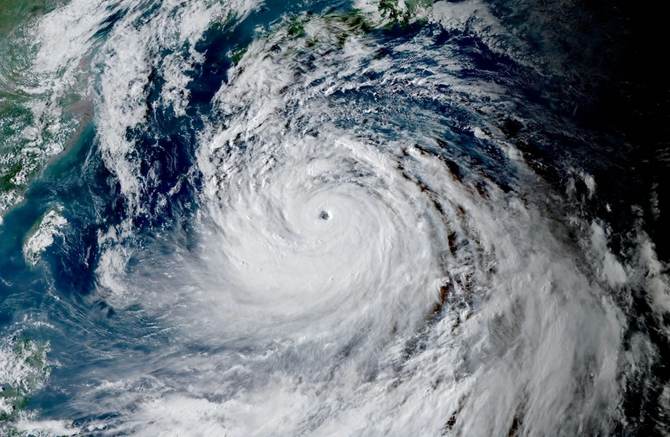
Typhoon Nanmadol, the 14th named storm of the 2022 Western North Pacific typhoon season, brought about significant impacts such as strong winds, heavy rainfall, flooding, and landslides to the regions of Kyushu, Shikoku, and western and central Honshu from September 18 to 20, 2022.
The most substantial losses occurred on Kyushu Island, accounting for 74% of the total industry losses. Despite its effects, the overall damage caused by Nanmadol was not considered extraordinary and remained well below the levels seen during major typhoons in 2018 (such as Jebi and Trami) and 2019 (including Faxai and Hagibis).
This can be attributed to Nanmadol’s relatively lower intensity and the high level of preparedness on Kyushu Island, which frequently faces extreme weather events.
Takashi Goda, who serves as the Senior Advisor for PERILS in Japan, expressed satisfaction in presenting the fourth and final loss report for Typhoon Nanmadol. This report is based on data directly collected from insurance companies that represent the majority of the Japanese general insurance industry.
Goda expressed gratitude for their support and emphasized PERILS’ commitment to providing valuable, high-quality exposure and loss data for Japan.
Dalida Bachmann, Head of Client Relationship at PERILS, highlighted that besides supporting research and development efforts, their industry loss figures are used as triggers for risk transfer products.
She noted with pleasure that since the last update on Typhoon Nanmadol in March, several new Insurance-Linked Securities (ILW) contracts have been established, using PERILS Japan as the source for determining industry loss triggers. This development signifies that their data contributes to attracting more risk capital into the Japan Catastrophe market, similar to other markets covered by PERILS.
Lukas Wissler, who serves as a Product Manager at PERILS, explained the value of providing both exposure and loss data, emphasising that it allows for the assessment of losses in relation to insured amounts and the calculation of damage severity.
Analysing the correlation between these damage levels and factors like wind gusts or rainfall metrics provides new insights into the vulnerability of insured assets, ultimately enhancing the market’s understanding of Japan’s typhoon risk.