With the re/insurance market facing compounding pressures in 2026, Capgemini’s Luca Russignan has suggested the gap is widening between those who execute and those who merely experiment, as AI’s double-edged nature rewards true trailblazers who are redesigning processes around the technology rather than simply adopting it.
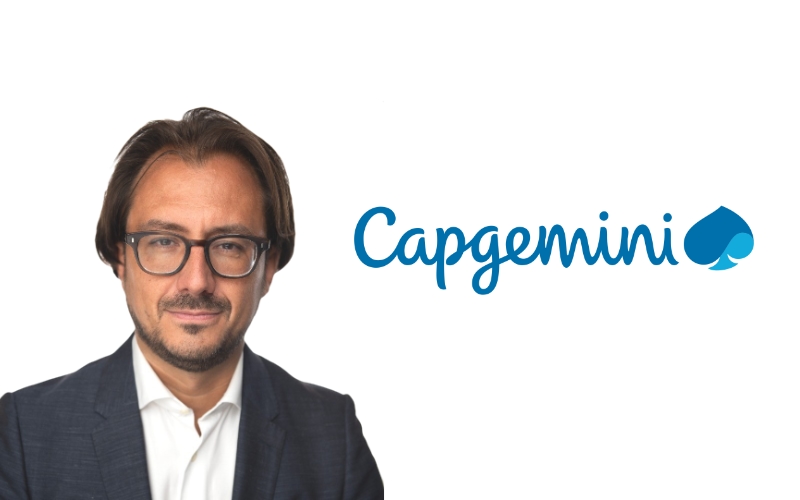 In a New Year discussion with Reinsurance News, Russignan, Global Head of the Capgemini Research Institute for Financial Services, outlined the key challenges and opportunities shaping the re/insurance market, shared his outlook for 2026, and discussed how the industry is preparing for the next phase of the cycle.
“The re/insurance market is facing compounding pressures in 2026, but pressure creates clarity. Risk patterns are shifting, technology capabilities are maturing, and the gap between those who execute and those who experiment is widening,” Russignan said.
According to the executive, risk is becoming increasingly clustered, and not just in physical terms.
Citing his firm’s World Property and Casualty Insurance Report 2025, Russignan noted that nearly 70% of the global population is expected to live in urban centres by 2050, concentrating people, wealth, and infrastructure.
“That amplifies exposure to catastrophic events, making risk pools denser and more volatile. But there’s a second concentration risk that few are talking about: digital infrastructure. There are a handful of generative AI providers today powering billions of business processes and creating a new systemic risk profile unlike anything we’ve seen before,” Russignan observed.
He continued, “This brings us to AI – the double-edged sword. Our data shows that 70% of insurers are planning AI agent deployments at scale, starting with customer service, followed by underwriting and claims.
“But here’s the trap: most AI pilots stay pilots. They remain siloed, creating technical debt and inconsistent operating models. The trailblazers aren’t just implementing technology – they are redesigning processes. You can’t bolt AI onto legacy processes and expect enterprise-wide transformation.
“In a world of uncertainty and rapid change, the real question isn’t if insurers should adapt, it’s how boldly and effectively they can do so to unlock growth and stay ahead.”
Turning to his outlook for the year ahead and the industry’s approach to the next phase of the market cycle, Russignan said that while the competitive landscape is being fundamentally reshaped, there is strong reason for optimism.
“The technology is here: 88% of insurers have adopted hybrid cloud to modernise their legacy IT infrastructure. The question for 2026 isn’t whether transformation is possible, but whether insurers will pair their technology investments with the organisational redesign that makes them work,” Russignan explained.
He added, “Let me give you an example of what success looks like: a global specialist insurer launched a generative AI-enabled underwriting model, built with Google Cloud, to accelerate underwriting for specialty risks such as sabotage and terrorism.
“The result? By mid-2024, the platform was processing 15-20 proposals per day with 98% accuracy, delivering measurable efficiency gains and rapid ROI.
“But here’s the lesson: success came from redesigning the entire workflow – how you operate as a business – and not just incorporating technology. This model of blending generative AI with in-house machine learning and geospatial analytics is now scaling up to form the basis of an enterprise-wide AI underwriting strategy.”
As per Russignan, the industry is collectively learning that tech alone doesn’t work and that redesigning processes and culture is the real test.
He continued, “Will everyone move at the same pace? No – the gap between leaders and laggards will widen – but laggards now have a roadmap.
“Take distribution and engagement as another example. Agents remain the human face of insurance, but their effectiveness is often hampered by siloed systems and manual processes.
“Capgemini’s World Life Insurance Report 2026 reveals that 67% of individuals under the age of 40 want digital access paired with dedicated advisor support, yet only 16% of insurers deliver this experience today.
“That’s not a technology gap – it is a business model gap. Insurers who are designing agent roles around AI-powered tools, rather than simply digitising existing processes, will see meaningful engagement with younger generations.”
Russignan noted these capabilities reduce onboarding friction, enable more targeted cross-selling and upselling, and strengthen customer loyalty.
For carriers, that translates into higher conversion rates and deeper customer relationships. Meanwhile, for agents, he said, it means moving away from administrative tasks and toward advisory excellence, meeting customers where they are with greater speed and confidence.
Russignan concluded the interview, “My prediction for 2026: Insurers will split into two camps. One camp will have invested heavily in cloud and AI, yet still struggle with operational friction because they digitised legacy processes instead of reimagining them. The other camp will have done the harder work of redesigning how humans and technology collaborate – and they’ll be 18 months ahead.”
With over 15 years of experience at top consultancies and insurers, Luca Russignan identifies emerging opportunities and risks in the banking and insurance sectors at Capgemini, translating complex market and regulatory trends into clear, actionable insights for senior executives across the UK, US, Italy, and APAC.