As the reinsurance sector’s H1 underlying return on equity (ROE) surpassed the cost of capital for the second year running, Brian Shea, Global Head of Strategic & Financial Advisory, Gallagher Re, suggested the current strong financial position makes the industry more equipped to cope if H2 turns out to be difficult in terms of natural catastrophe activity.
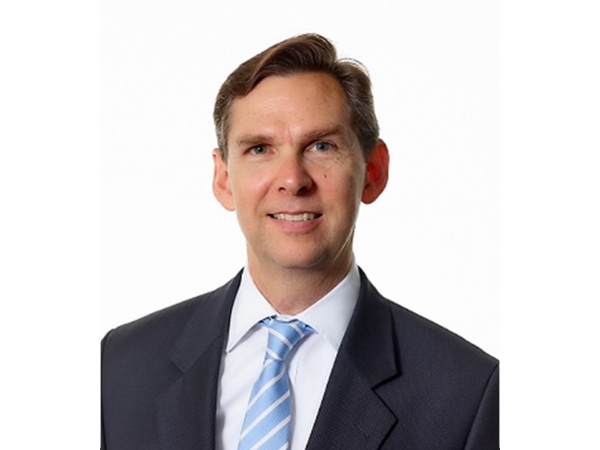 Reinsurance News spoke with Shea around the launch of the global reinsurance broker’s latest reinsurance market report, a bi-annual publication which examines the size and performance of the sector.
Discussing some of the key highlights of the report, Shea said, “If you closed your eyes and guessed what 2023 was going to look like, in terms of the financial health and profitability of the reinsurance sector, you would have guessed it’s going to be a good year.
“That’s pretty much what’s happened so far. Though we’re only looking at the first six months of the year, so anything could happen. But so far, that’s the case. Underlying results, they’re much improved, and they’re very strong.”
Shea noted that on top of this underlying performance is the additional benefit that nat cats in the first half of the year were lower than normal. He also underlined the fact that the investment markets have been strong, which has boosted both ROE and capital.
As per Gallagher Re’s report, global reinsurance capital rose 13% from the end of 2022 to $709 billion at half year 2023, as reinsurers “benefited from improving underwriting results and a strong investment performance.”
Indeed, industry capital levels are almost back to their 2021 peak of $725 billion and have again breached the $700 billion mark at the half year on the back of growth in both traditional and alternative capital.
The average ROE also improved for the group of reinsurers on an underlying basis, from 10.2% at 2022 half year to 13.4% this year. The reported ROE improved strongly as well, from 4.4% to 19.3%, driven by additional capital gains. The analysis shows that for the second year running, the underlying ROE is well above the cost of capital.
Shea went on, “This very strong financial position of the reinsurance sector makes the industry better able to cope, for example, if the second half of the year does turn out to be awful in terms of natural catastrophe activity, the sector is in a much stronger state to absorb that.
“The industry could eat another 17 percentage points in terms of the impact on the combined ratio of natural catastrophes above normal, we always build in normal, and then 17 points above normal is what the industry could absorb and still achieve an ROE for the year that’s in line with the cost of capital.”
Discussing what reinsurers need to do to ensure the industry’s ROE remains above the cost of capital in the future, Shea said, “There’s been enormous rate increases and very important tightening of terms and conditions.
“Profitability is such that there’s room for those to settle down and for some of them to be given back. Reinsurers have such a big gap now and are in really good shape to keep generating value for their shareholders.”
We then asked Shea if he anticipated more capital to enter the reinsurance market in 2024, to which he answered, “That’s one of the really big head-scratchers. Given how strong returns are, and how the writing was on the wall at 1.1, why is it that more external capital is not coming into the sector?
“What I would say is incumbents, for the most part, don’t need to raise money. If they want to capitalise on growth, their strong financial position means they can do it with their own resources.
“We had four or five years in a row of the reinsurance sector, saying, ‘If natural catastrophe losses are normal, our expected result is x,’ but the sector never delivered x. You can see why that created a big credibility gap.
“I think this year is a nice step in the right direction to restore that. Until now, that’s the best explanation I can come up with for why external capital or new money has not really been interested in entering the sector.”
Finally, we asked Shea if expects alternative capital growth to remain strong this year and also in 2024. He noted that there’s been a real dichotomy within alternative capital, with vanilla structures doing very well, while for anything that is non-vanilla, it’s been a struggle.
He continued, “Cat bonds have a vanilla trigger and vanilla definitions, they’ve grown very nicely. Collateralized sidecar structures, and other things with a funkier trigger or maybe with a more cedent-friendly structure, have struggled.
“There’s room for the strong cat bond growth to continue, though I think that the credibility rebuild needs to continue. As that happens, I think investors will start to slowly get more comfortable putting money into the non-vanilla structures.”