As reinsurers adjust their risk assessment models in Florida following much needed reforms, the cautious part of cautious optimism is fading and sellers are proactively engaging with Florida carriers, according to Adam Schwebach, Gallagher Re.
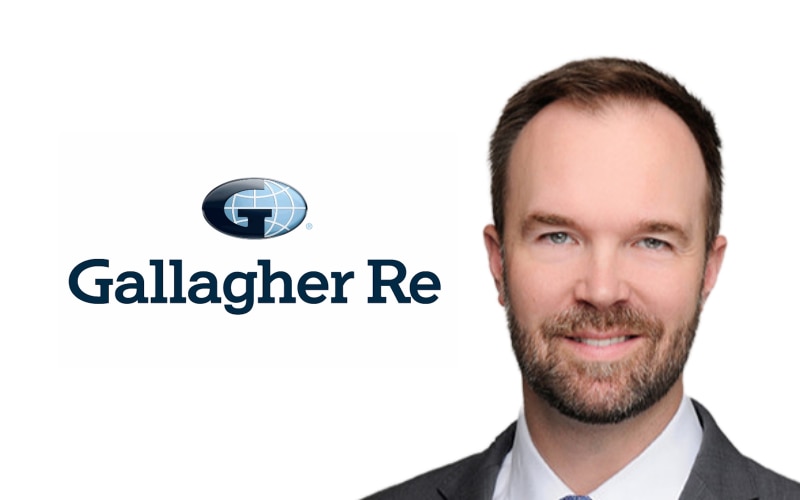 In an interview with Reinsurance News, Schwebach, Head of Property North America at reinsurance broker Gallager Re, discussed the Florida market and the outlook for the mid-year renewals, against the backdrop of the reforms in 2022 and 2023, which have stabilised the state’s property market.
To start, Schwebach gave his thoughts on how he expects the general trends in Florida to play out this year.
“The way I describe it is, we went into 2025 with cautious optimism that the legislative reforms were proving out. There was really solid data that was starting to come out of specifically Milton. Helene was more of a flood loss within the state of Florida, but Milton was showing signs of acting like a normal hurricane. Losses were coming in, as expected. You weren’t getting the historical first notice of loss that also had a lawsuit attached to it, that had become common prior to reforms,” he said.
“I would say as we enter 2026, the cautious portion of the cautious optimism is starting to go away, and I would say everybody in the state is actively looking to grow right now into what they view as a very, very positive, stable insurance environment,” added Schwebach.
This positivity, according to Schwebach, is also rolling over to reinsurers who are now looking at the state with renewed interest, pleased that the uncertainty surrounding lawsuits and everything that goes along with that has been removed, ultimately making reinsurers more comfortable to write Florida business.
“While we see all of the carriers actively looking to grow within the state, some (reinsurers) may say they would like to keep relatively stable in the state and they have enough, but I think that most would be happy to grow within the state mid-year this year,” said Schwebach.
Moving forward, Schwebach feels that the fact reinsurers have adjusted their risk assessment models in Florida since the reforms were put into place, is key.
“This is where we could get a bifurcated view depending on whether you talk to a company, a broker, or a reinsurer, on what the overall rate impact is in any given year, because behind the scenes reinsurers are messaging and telling us they’re doing exactly that. There were loads that they were forced to include within their pricing for litigation, for social inflation, for all of the buzz words that we’ve heard, and they’re very actively reviewing those assumptions right now, and in many instances, starting to reduce them.
“That’s going to, just on its own, have a very positive effect. And that’s why I think that you’ll see a bifurcation in what reinsurers view the difference in rate being in any given year. I think we saw a little bit of this last year, but I think we’ll see more of it this year. Last year, most brokers were reporting something like a 15% decrease in rates. I think it’s very possible that a reinsurer could look at that and say, actually, when we strip out some of these loads, we may see rates down five-ish percent, and that feels pretty positive,” he said.
Adding: “So, I expect we’re going to continue to see that trend in 2026 where reinsurers are reassessing the loads that they’re putting into the Florida market, and to the extent they can get back to just underwriting hurricane risk, which they’re very good at, I think they’re very happy to do that. So, I think all of that will lead to rate reductions in the state in 2026.”
Prior to the reforms, reinsurers pulled back from the Florida property market to avoid the rising costs tied to litigation post-event, but with the 2026 mid-year renewals fast approaching, Schwebach notes that “this is the most proactive in years” that he’s seen reinsurers in engaging with Florida carriers.
“For example, we had reinsurers reaching out in July of last year with ideas and proposals for carriers to think about for 6.1 of this year. They are absolutely thinking forward and trying to partner with the people that they’ve been partnering with for the past several years, and look for growth opportunities.
“It’s actually a lot of fun for clients to be on their front foot and starting to explore some creative ways to think about reinsurance. And for brokers, we love it, because the fun part of our job is in the creativity and helping people grow. And reinsurers, coming to brokers and cedants with ideas, is a really fun place to be,” he said.
As Gallagher Re’s January renewal report highlights, property and notably property catastrophe reinsurance rates softened further at the 1.1 2026 renewals, and as supply outpaced demand, Schwebach expects reinsurers that failed to reach their growth targets at January 1 to look for growth at the mid-year.
“I think that’s going to lead to more supply. I think it’s going to lead to more appetite for reinsurers for the Florida business and write mid-year renewals in general. So, that’s all a very positive thing. Reinsurers aren’t going to throw away any of their underwriting guidelines and not worry about pricing as they think through hitting revenue goals, but it is going to be a factor that they’re going to need to think about,” said Schwebach.
To end, Schwebach discussed where he sees the main growth opportunities for re/insurers in Florida.
“I think that there’s opportunities certainly below the fund. For those that had moved away from writing underneath the FHCF, we did see some markets coming back to that market last year. I think we will see an acceleration of that in 2026, a lot of that again has to do with the certainty around the results that they’re seeing. If you go back in time, it wasn’t just hurricanes, but SCS events that could have a very negative impact fairly high into a reinsurance program where reinsurers were not expecting that. SCS events were largely driven by litigation historically within the state, the fact that those have gone away, it’s essentially become a non-issue for both carriers and reinsurers that are providing that coverage at the bottom-end of the curves. And I think that will give a lot of them the certainty to move down in programs,” he said.
“The other thing which reinsurers are messaging is a willingness to look at structural creativity. Whether that’s adding some dropping component, providing some aggregate coverage, I think that there is a view that the ILS market is certainly willing to consider those types of structures right now, and the traditional market will need to follow suit in order to not lose ground,” concluded Schwebach.