As Pool Re rolls out a new incentive scheme designed to encourage Members to reintegrate terrorism cover as standard within SME property policies, CEO Tom Clementi said the initiative has the potential not only to strengthen SME resilience, but also to improve economic security and materially increase the uptake of terrorism insurance across the UK.
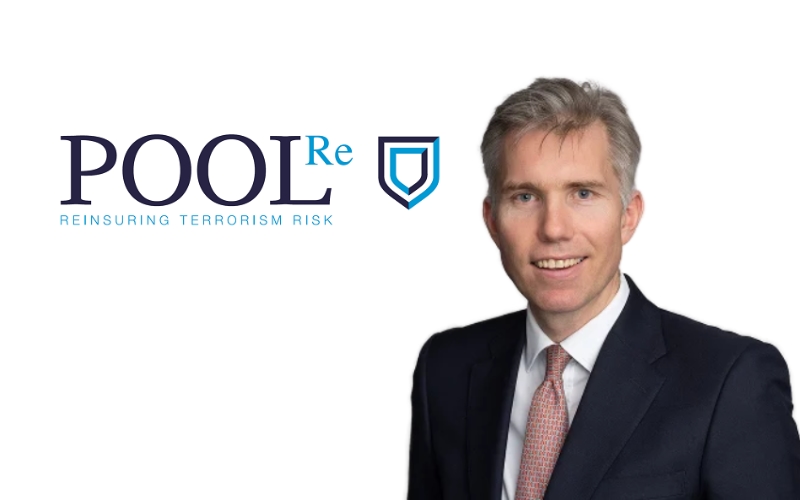 Designed in consultation with its Members and HM Treasury, Pool Re revealed in an announcement earlier this week that Members can now choose to reinstate terrorism cover across some or all of their commercial property portfolios in return for reduced pricing on their reinsurance with Pool Re.
In an interview with Reinsurance News, Clementi observed that SMEs’ margins are being squeezed, not helped by inflation, which is on the rise again following the latest conflict in the Middle East.
“When Pool Re was set up in 1993 by the UK Government in partnership with the UK insurance market, the founding mandate was to make terrorism cover affordable and accessible for all businesses, not just large corporates,” Clementi said.
He continued, “The reality is that, here we are more than 30 years later, and take-up of terrorism cover among SMEs in the UK is still very low. The penetration rate is currently around 4%, based on a recent survey, which means there is a very large protection gap.
“Not only is there a protection gap, but there is also a significant expectation gap. While only about 4% may actually have the cover, many more believe they do.”
According to Clementi, the challenge of improving take-up among SMEs has been around for a considerable amount of time.
He noted that the need to address the issue, to bolster the UK’s economic resilience and thereby its economic security, was illustrated during the pandemic, when SMEs struggled.
“If there is an event that prevents SMEs from accessing their premises and trading for two, three, or four weeks, that can be existential for very small businesses, particularly those at the smaller end of the spectrum. We recognise this is a cohort of businesses that typically lacks the economic resilience you might see in larger firms,” Clementi said.
He added, “We therefore felt that the best way to address the SME protection gap was not on the demand side, but on the supply side.
“What we have developed is a voluntary discount scheme. It is not mandated across our membership, but for those Members who choose to participate, if they can demonstrate that they have reintegrated terrorism cover into their SME property package policies as standard, and in such a way that the underlying policyholder cannot remove the terrorism cover, they will be entitled to significant discounts.
“Essentially, we are encouraging Members to reintegrate terrorism coverage into their standard property policies through pricing incentives.
“I should add that the scheme does not apply to central London, but outside central London, discounts are available of up to 90%, so they are meaningful.
“Having consulted widely with our membership, we believe this will enable participating Members to offer terrorism cover to their underlying policyholders at negligible additional cost, or potentially at no additional cost at all.”
Clementi went on, “Over time, we believe that we will see the current 4% penetration rate increase quite significantly. It will take time, but we have had very positive indications, and indeed some commitments, from Members that they will make use of the scheme. So we are optimistic about that penetration rate ticking upwards quite meaningfully over the coming years.”
Speaking on the overall impact the scheme will have on the wider UK insurance market and SME community, Clementi stated, “The impact for SMEs will be to make them more resilient. The Prime Minister is now on record as saying that economic security is national security.
“So if we are in a situation where 96% of SMEs do not have terrorism insurance, then were there to be a terrorism event, we could see a large number of businesses really struggling and potentially going under.
“It is also important to remember that the vast majority of businesses in the UK are SMEs; something like 99% of businesses in this country fall into that category, and, as I say, around 96% of them currently do not have cover. So, in terms of the positive impact on the UK economy, this is really about bolstering national security through improved economic resilience.
“We consulted quite widely, including with the private market, so we do not believe that anything we are doing will tread on the toes of private insurers.
“The definition we are using for SMEs in this context is businesses with total insured values of £10 million or lower. This initiative is really aimed at the smaller end of the SME community, rather than larger, medium-sized businesses.”
Lucy Rigby KC MP, Economic Secretary to the Treasury, commented on the scheme, which came into effect on 1 April, “Pool Re plays an important role in supporting the UK’s economic resilience, and this incentive scheme delivers real market change for the UK’s SMEs.
“The Government stands ready to support efforts to strengthen the resilience of UK businesses, and we encourage Pool Re’s Members to make the most of this excellent opportunity to expand their SME coverage offering – it’s good news for Pool Re, its Members and the UK’s business community.”