New research from specialty re/insurance group Chaucer shows that 16% of US hurricanes and storms are now hitting northern states such as New York, New Jersey and New England, compared to just 12% four decades ago.
At the same time, data shows that the proportion of hurricanes that have hit southern states like Florida and Georgia, as well as Caribbean islands, has dropped from 60% to 54% in the past 20 years.
States that fall between these two regions – such as North and South Carolina, Virginia, Maryland and Delaware – are also being hit by proportionally more hurricanes, Chaucer found.
These inbetween states were hit by 30% of all US hurricanes between 2001-2020 compared to 24% between 1961-1980.
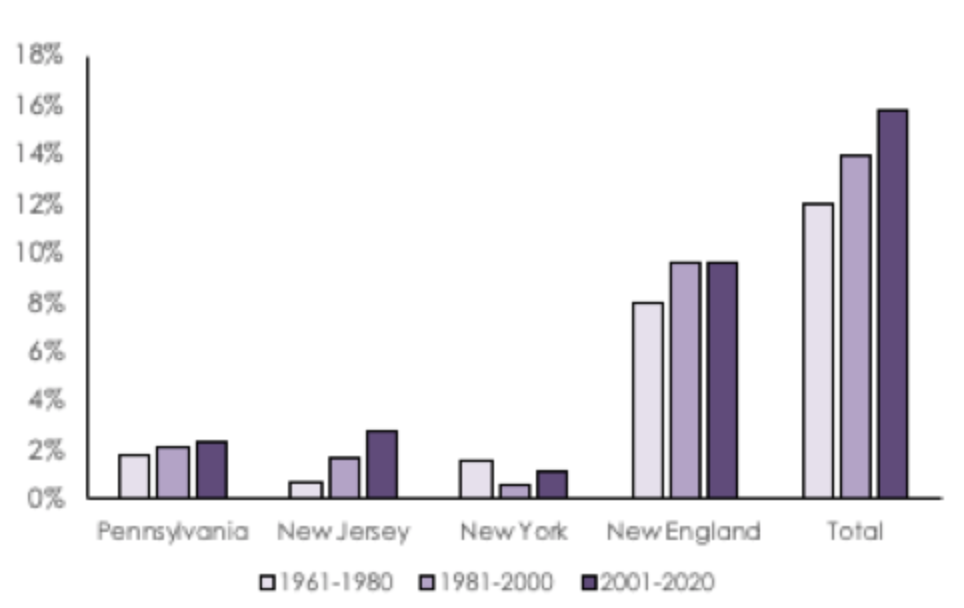
Chaucer says the study reflects the growing trend of hurricanes moving further north with greater ferocity, meaning locations outside of traditional storm hotspots are likely to be affected more often.
The shift in hurricane patterns is also likely to mean that both home and business owners in these areas will need to be prepared for increased storm risks in the years to come, a trend that Chaucer warns not all risk models used by insurers have adapted to.
“Key aspects of these storms have become more uncertain with the changing climate, and this is driving a need for insurers to redefine their risk models,” said Dana Foley, Head of Catastrophe Research at Chaucer.
“Whilst areas such a Florida have battled with hurricanes for years and learned to adapt to tropical storms, areas further north are likely to now see an increased intensity of hurricane activity that they may be unprepared for. This is something that insurers will need to factor in when assessing risk.”
Scientists believe there are a number of factors making storms more intense and increasing the risk of substantial damage in those that make landfall.
Climate models also show that hurricanes are becoming slower-moving, which is likely to result in high levels of rainfall from the storms and higher damage -particularly from flooding – spread over a wider area.
But the bottom line is that this trend towards higher-intensity, slower-moving storms will increase the damage exposure for clients in the US.
“The most severe hurricanes are becoming even more severe,” Foley continued. “More heat in the system is a key driver of this and it is having other potentially significant impacts, such as extending the distance inland of strong winds after landfall.
“Many of the historical norms that we have relied on for modelling have to be revisited. As (Re)insurers, catastrophe model vendors, industry risk managers we all need to get a better handle on this.”
“We can expect to see the trend of more severe hurricanes continue as long as the climate continues to warm. This will mean higher windspeeds and greater precipitation, which could ultimately lead to more property damage.”