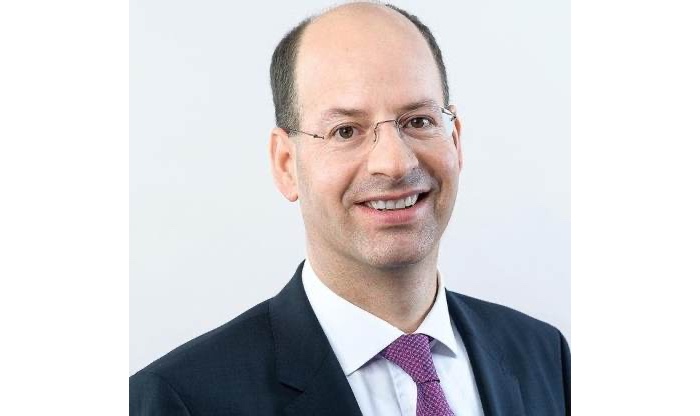
The fact the cost of capital and the return on equity (ROE) are once again almost in synch is a positive development for the insurance industry and beyond, according to Jérôme Jean Haegeli, Chief Economist at reinsurance giant Swiss Re.
 As highlighted in Swiss Re’s latest Sigma report, the uptick in investment yields on the back of positive interest rates has enabled the insurance industry to earn its cost of capital again.
However, the outlook suggests that with anticipated rate cuts by the US Fed and other major central banks in the latter half of 2024, the cost of capital is unlikely to see significant further increases. As a result, stable conditions are projected for 2024 and 2025.
The report also highlights that alongside an improving return on equity (ROE), these stable cost of capital conditions are expected to lead to a narrowing of the profitability gap for property and casualty (P&C) insurers across most markets over the next two years.
During the Swiss Re Sigma media conference, executives were questioned about the insurance sector’s cost of capital.
“I think now, with the interest rate environment, so sovereign bond yields being back in positive territory, this is what we have been used to before the global financial crisis in 2008, and that’s a good thing, that’s normal.
“That led to an increase in cost of capital, but at the same time, you also see an increase in the return of equity of insurance companies,” said Haegeli.
According to Haegeli, this alignment of the cost of capital and ROE is a benefit beyond just insurance players and the broader industry, as it enables the sector to build up more capital which is needed to address many of the issues highlighted in the report, such as climate change and the increased severity of natural catastrophes.
“For that, it’s good to have a strong capital-based insurance industry,” added Haegeli.
Expanding on the cost of capital and why it’s different in this market cycle than previous ones, Haegeli explained that this is due to “the risk-free rate being in negative territory, and there is nothing the insurance industry can do about that, the risk-free rate is given by the unelected government officials, the Central Bank community.”
“If risk free rates are below negative, then the market itself is just not functioning as it used to be. And now financial repression is over, that’s a good thing. Interest rates are positive again, and that allows the industry to earn its cost of capital again. Even though, not in all jurisdictions this is yet the case, as just mentioned. But for the G8 countries, on average, it is the case,” he said.