China’s reinsurance market remains challenging for non-life reinsurance companies and is in fact becoming an increasingly difficult place to operate, according to rating agency A.M. Best.
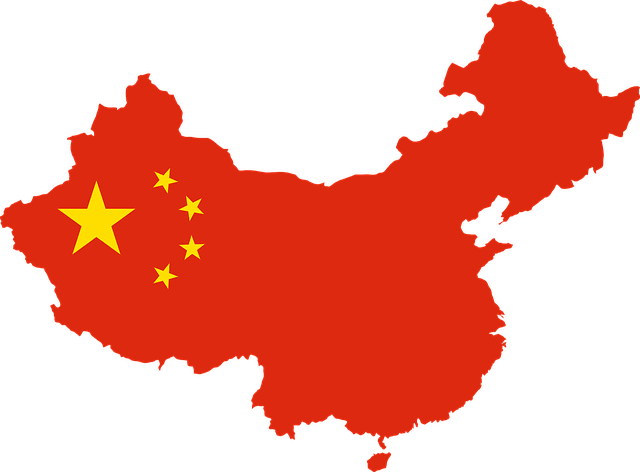 A.M. Best highlights a number of issues that face both non-life and life reinsurance companies operating in China, although the prospects for the life side look brighter as strong growth in premiums has helped to buoy this sector.
High levels of competition and regulatory pressures are hindering non-life reinsurers prospects in China, A.M. Best says, going on to explain in a new report on the sector that many of its difficulties stem from the relatively recent introduction of the China Risk-Oriented Solvency System (C-ROSS).
The rating agency also notes that the Chinese reinsurance market is facing similar challenges to the rest of the globe, with a “glut of reinsurance capacity” and “growing retention by the direct industry” both threatening reinsurers ability to grow premiums sustainably and pressuring prices.
Profitability is therefore a concern, A.M. Best notes, with both the homegrown reinsurers and international specialists vying for business in a market where growth opportunities remain limited.
A.M. Best also notes the “oligopolistic structure of the direct market” which means that large cedents have considerable bargaining power and this is resulting in additional pricing pressure and also undermining terms and conditions as well.
As a result the margins on underwritten reinsurance business have been falling in China, pushing reinsurers to look further afield at so-called Belt and Road initiatives and captive insurers for opportunities, as well as anticipating future business demand from the implementation of the second phase of C-ROSS.
Competition from Hong Kong is also considered a threat that both life and non-life reinsurers in China need to be wary of.
Hong Kong regulators are working on their own version of C-ROSS, which could allow Hong Kong domiciled reinsurers to act as onshore players in China.
While still a few years off, if Hong Kong is successful it could attract greater volumes of reinsurance capital to the domicile as it seeks easier access to the Chinese domestic insurance and reinsurance market.
A.M. Best expects that regulation and government policy will continue to play a defining role in the future of the Chinese reinsurance market, while also indirectly influencing demand for coverage.
Further work to calibrate capital and insurance risk charges for non-life lines of business are expected with the second phase of C-ROSS, while on the life reinsurance side strong growth could be hindered by firmer capital requirement rules.
A.M. Best expects that regulators will push the life industry to refocus on offering true protection products, rather than financial reinsurance, to serve the real economy. As a result the rating agency expects that protection reinsurance will grow, calling it the new growth engine, fueled by direct life insurance market growth.
A.M. Best also notes that onshore mid-sized insurers are set to ramp up the competition, by writing an increasing amount of inwards reinsurance to boost their top lines.
Further affecting the reinsurance market in China, A.M. Best notes a shortage of talent that could hinder market development.
But on the positive side, reinsurers operating in China are hoping for a firmer January reinsurance renewal in the region, as a result of the major losses around the globe, which could help to shore up profits for a bit longer.