Rachel Bardon, Chief Underwriting Officer (CUO) at international specialty reinsurance group Compre, said the company is expanding its appetite to include more prospective and capital-focused transactions as the legacy market continues to evolve, while remaining rooted in traditional legacy transactions.
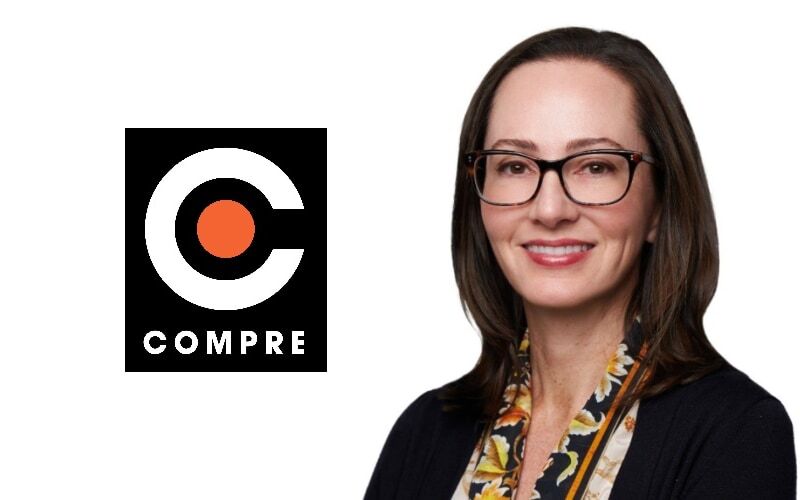 In an interview with Reinsurance News at Compre’s headquarters in Bermuda, Bardon said the company is focused on careful, measured growth on the prospective side.
Nonetheless, she affirmed that while Compre has expanded its appetite, it has not shifted away from its core focus, emphasising that it remains a long-tail specialist providing capital and claims solutions to partners they seek to have a long-term and repeat relationship with.
“We have not pivoted away from legacy. We’re still a specialty reinsurer, with the majority of our time and energy on the legacy side, and right now it’s careful growth on the prospective side,” Bardon said.
She highlighted that, in recent years, legacy deals coming to market have become increasingly “green”, moving closer to more recent underwriting years. Given Compre’s focus on long-tail liabilities, she said the firm is now comfortable extending its expertise to the current year in some circumstances.
Bardon explained, “For our strategy, we are still primarily a legacy player, so the shift is towards a specialty reinsurer, which includes legacy and prospective transactions and other capital and claims solutions. On the legacy side, a large portion of those are claims and capital solutions, where they might transfer all claims liabilities for a discontinued block of business, which is often the traditional legacy transaction.
“What we’ve seen over the last couple of years is a shift towards some transactions being more purely capital solutions rather than claims solutions. So, the cedent may choose to maintain their claims handling, they don’t need to pass it over. It’s not a discontinued block of business. It might be more of a capital solution, might just be part of the capital stack, and that’s very similar to what prospective business is—we are not taking on underlying claims, but providing proportional capacity.”
Bardon said Compre has focused on opportunities where there is synergy or follow-on potential between prospective and legacy business. Stating, this is what makes Compre unique – balancing the needs of clients across the lifecycle.
“Our focus has been on low-volatility, medium to long-duration, diversified blocks of business in which we are aligned with the cedent, and there is some kind of package or potential opportunity for there to be a future or concurrent legacy trade associated with that. That could be a whole account quota share that comes directly onto our balance sheet. And at the same time, we’re also providing an ADC and LPT on the old blocks of business. As we’ve already conducted due diligence on the management team, and have reviewed claims, actuarial and credit risk associated with it we’ve therefore become comfortable with the exposure. And so now we’re taking on that exposure for the current year and the prior year at the same time through two different transactions,” she said.
She added that as part of the prospective strategy, Compre is providing Funds at Lloyd’s (FAL) to syndicates, where Compre has historically participated through reinsurance-to-close transactions.
“For a FAL investment, we can come in and provide FAL to a third-party syndicate, and if we’re a decent proportion of that FAL, we are the likely party to be the reinsurance-to-close provider in three years’ time. And thus there is that synergy between the prospective side and continuing with our legacy pipeline,” Bardon said.
Bardon further highlighted that prospective and legacy business are counter-cyclical, meaning when one is softening, the other is usually hardening, and vice versa.
“Our business plan and operating platform gives us the freedom to choose how we use our time and capital. Depending on where the best opportunities are, we might decide in a year or two to focus more on prospective ventures, or if the margins aren’t strong enough, we may prioritize legacy deals instead. This flexibility ensures we can always concentrate our resources on the areas with the greatest potential”, said Bardon.