Moody’s RMS Event Response has estimated that U.S. insured losses from Hurricane Beryl will likely fall between $2.5 billion and $4.5 billion, encompassing damage from wind, storm surge, and precipitation-induced flooding.
 At the same time, according to the firm, losses to the National Flood Insurance Program (NFIP) from this event are estimated to be less than $300 million, while the anticipated total non-U.S. insured losses from Hurricane Beryl will not exceed $1.5 billion.
Moody’s RMS observed that damages in the Caribbean, including Jamaica and the Windward Islands drove the majority of insured losses outside of the U.S.
Meanwhile, insured losses in Mexico are expected to remain low as Beryl’s track largely spared the densely-populated hotel and resort region of the Yucatán Peninsula.
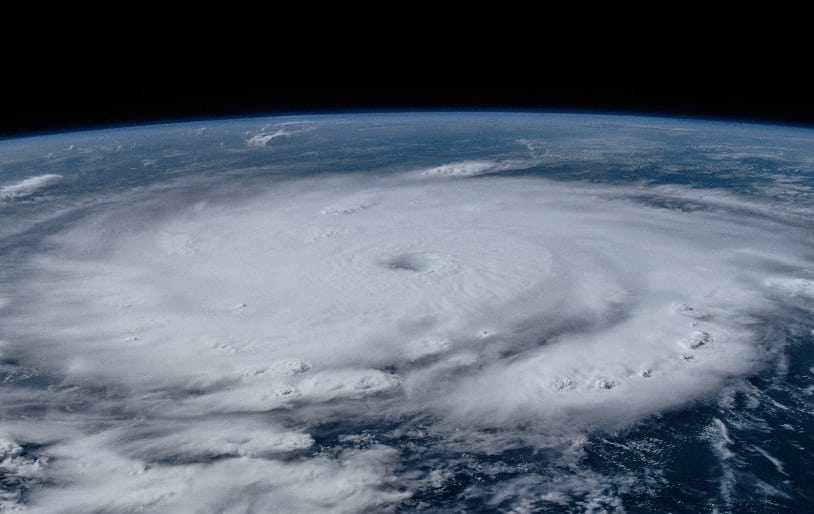
For those unaware, Beryl began as a tropical depression over the central tropical Atlantic on June 28, organising into a tropical storm just a few hours later and rapidly intensified over the next two days, becoming a Category 4 hurricane on June 30, the earliest hurricane of this strength recorded in the Atlantic Basin.
Then, on July 2, Beryl became the earliest Category 5 hurricane on record, surpassing the previous record of Hurricane Emily by over two weeks.
The path of Beryl stretched from the Windward Islands in the Caribbean to the Texas Gulf Coast. The storm made three separate landfalls: Carriacou Island, Grenada on July 1; Tulum, Mexico on July 5; and finally Matagorda, Texas on July 8.
This estimate by Moody’s RMS falls somewhat in line with that of catastrophe risk modeller CoreLogic, which recently updated its insurance industry loss estimate for the impacts of Beryl, putting the total for wind losses in Texas at between $2.5 billion and $3.5 billion.
Jeff Waters, Director, North Atlantic Hurricane Models, Moody’s, commented, “Hurricane Beryl was yet another complex and impactful event across multiple fronts and regions. Parts of the Caribbean sustained catastrophic damage that will unfortunately take a long time to fully recover.
“Beryl ran out of room to intensify in the Gulf of Mexico before making landfall in Texas, which lessened the impact on the (re)insurance market. Tracking inland, Beryl is certainly noteworthy as it maintained intensity to bring some of the strongest observed winds in recent history over the densely populated Houston Metro area.”
Waters continued, “Texas building codes – while not as stringent as other states – should allow most structures to withstand the winds reported from Beryl, but with the region’s high exposure density, significant amounts of expected minor/moderate damage will contribute to the overall total insured losses.
“Estimated losses reflect property damage and business interruption to residential, commercial, industrial, watercraft, and automobile lines of business, and consider sources of post-event loss amplification (PLA) and non-modelled sources of loss.”
Raj Vojjala, Managing Director, Model Development, Moody’s, said, “In addition to wind and water modelled impacts from Beryl, numerous treefall-related damages, infrastructure washouts to roads and railways, and tornado-related damages were reported.
“Together with significant power outages (over two million at peak), all could exacerbate damage, prolong repairs and business interruption, and cause pockets of claims inflation.”
Vojjala went on, “After Hurricane Harvey in 2017, South Texas witnessed notable coverage leakage from inland flood on wind policies and litigation-related impacts, and to a much lesser degree, Beryl may also produce similar effects.
“Wind will largely drive U.S. private market insured losses from Beryl, though storm surge and inland flood-related losses could contribute to higher proportions of insured losses, particularly in some of the worst-affected Texas counties, in non-coastal regions with significant NFIP take-up rates.
“Insured wind and NFIP losses will be driven by residential lines, while commercial and automobile lines will drive private market water losses, primarily in Texas.”
Julie Serakos, Managing Director, Product Management, Moody’s, added, “We expect most insured losses from Beryl to be retained by primary insurers, and some economic losses, particularly in the Caribbean, to be aided by triggering parametric coverage in place.
“Hurricane Beryl seemingly sets the tone for an expected active and potentially impactful North Atlantic Hurricane season.
“All (re)insurance value chain market segments need to prepare to monitor and respond to unfolding events, with the latest Moody’s RMS modelling tools and exposure datasets reflecting the most current and complete views of the hurricane risk landscape.”