John Dacey, Chief Financial Officer (CFO) of Swiss Re, has said it’s clear that reinsurers require better expected returns on the business they write, suggesting it’s going to be a challenging January 1st, 2023, reinsurance renewals amid a classic supply-demand imbalance.
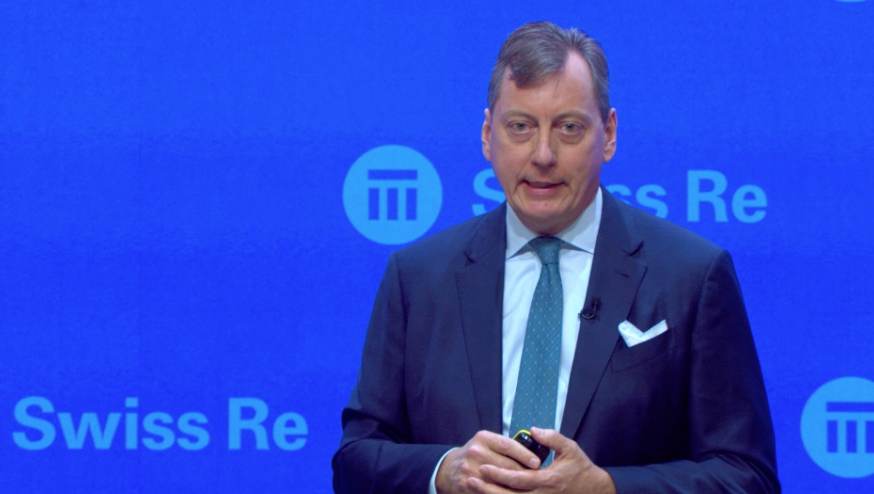 Early this morning, Swiss Re released its 9M 2022 results, reporting a net loss for the period on the back of large natural catastrophe claims, lower investment results, and an increase in reserves to address the impact of economic inflation.
Shortly after the release, executives from Swiss Re, one of Europe’s big four reinsurers, held a media call to discuss the results and provide some colour around market conditions ahead of the key Jan 1st renewals season.
“I think we see a market dislocation in reinsurance broadly and natural catastrophe specifically,” said Dacey. “It’s clear that, among other things, inflation has increased asset values around the world, increased the amount of protection that’s required by those asset owners from the primary companies, and increased the amount of exposures that the primary companies would like to reinsure.”
On top of this, Dacey warned of fatigue and frustration from third-party capital in the insurance-linked securities (ILS) space, as well as a pre-Ian announced reduction in capacity by numerous reinsurers in the natural catastrophe space.
All of this, said Dacey, “means that we have a disequilibrium, a classic supply-demand imbalance at January 1 and my expectation is prices will not show some sort of an evolutionary adjustment, but rather a fairly radical adjustment up to reflect the risk that is being transferred on these tail events.”
Swiss Re is one of the reinsurers that has expressed its commitment to the nat cat space in spite of rising loss costs and heightened volatility, but Dacey stressed that it’s not clear that the firm will actually increase, in any meaningful way, its overall exposure.
“What we will be is a committed participant in this space as we go forward,” he explained. “We will work with clients that are willing to acknowledge the underlying risks and the appropriate prices. But I would expect a material increase in that pricing and I would expect a material increase in the retentions of risk by primary companies as we move forward.”
“I think it’s clear to all that we would not just expect, but require better expected returns on the business we write and therefore, discussions with our clients are in some ways, reflecting that reality, but are likely to leave some people unhappy with the amount of price increase that we believe is appropriate in this moment,” he added.
According to Dacey, Swiss Re feels it has a good view of what an appropriate price is and the firm is in active talks with clients to ensure that they understand its models for increased loss-cost expectations, as well as the margins it expects to be loaded on top of that as it heads into next year.
“So, we’ll see where the January 1 renewals go, but it will be challenging, broadly speaking, and especially with respect to anything touching the Florida market,” said Dacey.