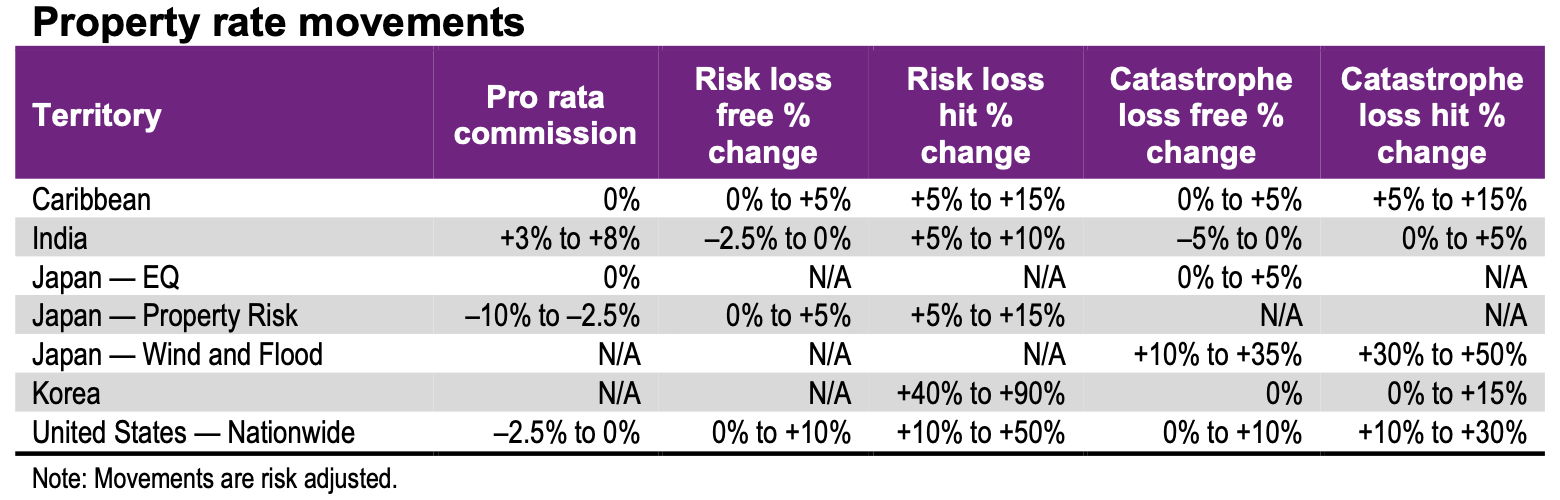
Willis Re has reported that reinsurance rates were up by between 30% and 50% for Japanese wind and flood risk at the recent April 1 renewals.
The broker said that these renewals saw higher rate increases than occurrence layers, with reinsurers applying significant pressure for restructuring.
The renewals were also reported to be orderly, with a wide range of quotations received and no one reinsurer standing out, although traditional European reinsurers were more aggressive in seeking rate increases
According to Willis Re, reinsurers were typically a little disappointed by the firm order terms, with some reinsurers seeking to move up on programs reflecting a desire to rebalance their portfolios rather than price adequacy.
Some layers were impacted in 2019 by loss deterioration from Typhoon Jebi in 2018, while lost capacity was quickly replaced, with significantly more capacity waiting to support higher pricing.
For Japanese earthquake, pricing was generally viewed as adequate by reinsurers, with upwards of $1.5 billion of new capacity sought, mainly by mutual.
And for property risk, buyers typically focused renewal discussions on catastrophe rather than risk, with some resistance to late requests for cyber and pandemic exclusions.
Some buyers restricted natural catastrophe coverage from fire pro rata treaties, Willis Re reported, while a proactive stance on underlying rate increases was considered key to securing capacity.
COVID-19 made operating conditions more difficult for US business renewing at April 1, although analysts noted that business continued to be transacted with strong communication among all parties.
Some reinsurers only authorised capacity with COVID-19 or Communicable Disease exclusions, although traditional capacity was still available.
For Caribbean business, Willis Re reported that reinsurers were focused on wordings and were reluctant to accept any expansions of coverage.
Capacity was still available, but reinsurers were firmer in their demands on terms and conditions, and some reinsurers were prepared to cut their capacity on programs if original rate movements did not meet their expectations.
For India, the majority of buyers suffered risk losses resulting in moderate price increases, while continued rate improvement on the underlying business led to renewed interest in pro rata treaties.
And finally, in Korea Willis Re observed a substantial reduction n capacity for risk and pro rata programs due to the major Lotte Chemical loss in early March.
Analysts explained that this loss drew reinsurers’ attention to the potential accumulation issue through coinsurance and the adequacy of underlying risk rates.