Analysts at Fitch Ratings have reported that the underwriting performance of US property and casualty (P&C) insurance commercial sector lines is “poised for favourable underwriting gains in 2022,” barring outsized natural catastrophe losses.
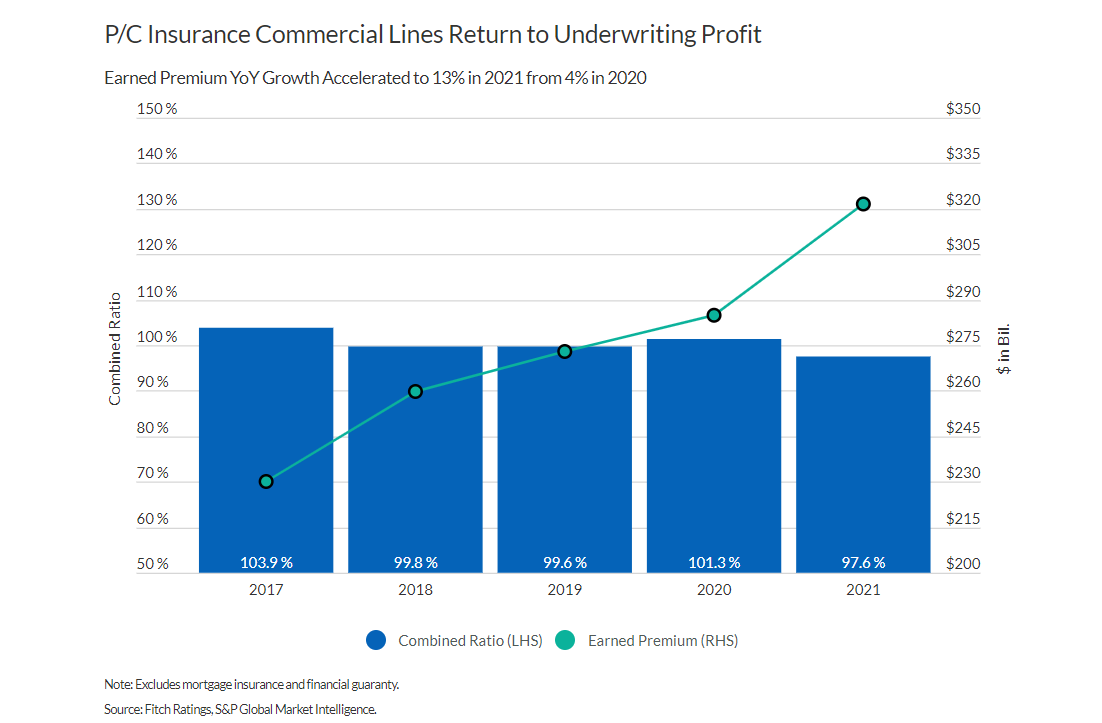
Commercial lines’ underwriting performance returned to profitability in 2021, with significant declines in both calendar-year loss and expense ratios.
The combined ratio of 97.6% was the best result since 2015, and Fitch projects it will fall further to approximately 95%-96% for the year, as prior underwriting actions benefit earned premiums.
However, premium growth will likely moderate in 2022 as profits peak in the current market cycle amid potential effects on loss-cost trends from rising inflation, higher litigation costs and economic uncertainty.
Sector net written premium (NWP) expanded by 15%, boosted by continued premium rate hikes in most product lines and exposure growth as economic activity rebounded from the pandemic.
Workers’ compensation remains the most profitable individual commercial segment, with a 90% average CR from 2017 to 2021, but Fitch notes that results are most likely unsustainable given competitive market forces and potential for higher medical inflation costs.
Analysts attribute improvement in overall commercial lines performance in 2021 to material improvement in liability segments.
Commercial auto shifted to a 99% CRs following a decade of annual underwriting losses, Medical professional liability insurance (MPLI) also improved but still lags with a 108% CR.
Also of note, favourable calendar-year reserve development in 2021 at 1.6% of earned premiums improved moderately from the past two years.
However, persistent, high inflation could create reserve uncertainty for casualty and liability segments, and could continue to pressure auto and property line results, and pandemic-related lags in litigation that have benefited results may also be unsustainable as judicial activity reverts to prior norms.