The month of September was defined by wildfire losses totalling around $5.6 billion and contributed to a year-to-date insured catastrophe loss total that financial services company Jefferies estimates is 5% above the 10-year average.
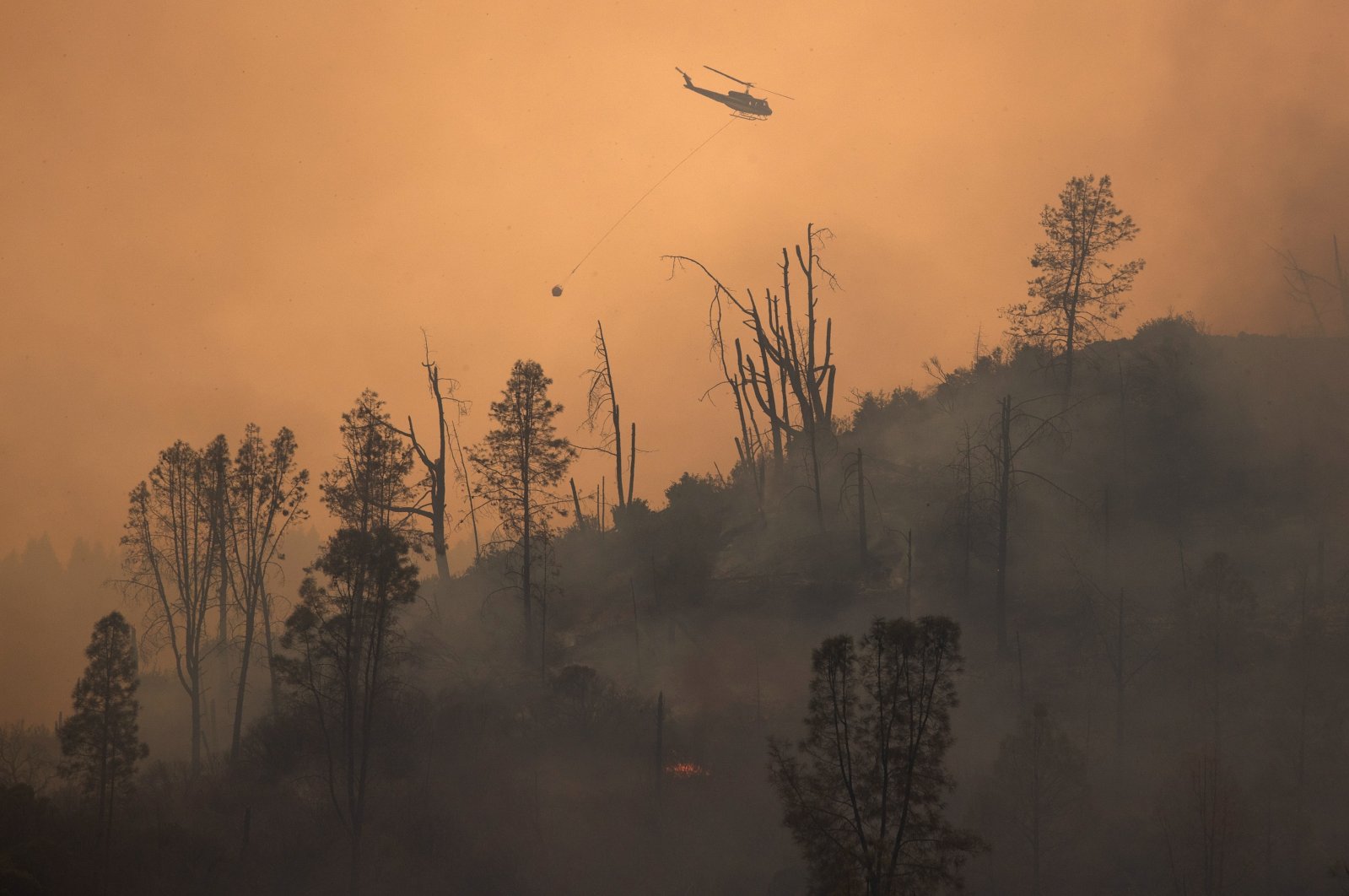
The LNU Lightning Complex fire near Middletown, California. (Reuters Photo)
This suggests that annual catastrophe loss ratios may marginally exceed budgets.
Nevertheless, with an unusually high aggregation of smaller events, analysts expect the distribution of losses to impact insurers marginally more than reinsurers.
As expected, given last month’s claims, wildfire losses in September remained high relative to the same month in previous years.
California, Oregon and Washington were most impacted and, based on Jefferies’ estimates, US wildfires resulted in more than twice the level of insured claims as US tropical cyclones.
The range of modelled industry estimates now stands between $4 billion and $8 billion.
Insured losses in September saw tropical cyclone losses remain in line with the long-term historical averages.
In the Asia-Pacific region Jefferies notes that insured losses are materially lower than previous years, largely due to less severe tropical cyclone events.
For 2020 Jefferies’ reading of the data year-to-date is that the frequency of insured events is higher than average, while the severity of events is in line or below.
For the insurance industry, analysts would therefore expect an outsized proportion of insured losses to remain on insurer’s balance sheets, leading to a high catastrophe loss ratio, while reinsurers experience catastrophe losses nearer to a level that’s in line with average (and probably therefore in line with their budgets).