Stand, a property insurance and risk mitigation company that uses advanced modelling to assess catastrophe exposure at the individual home level, has introduced its first voluntary hurricane insurance product in Florida.
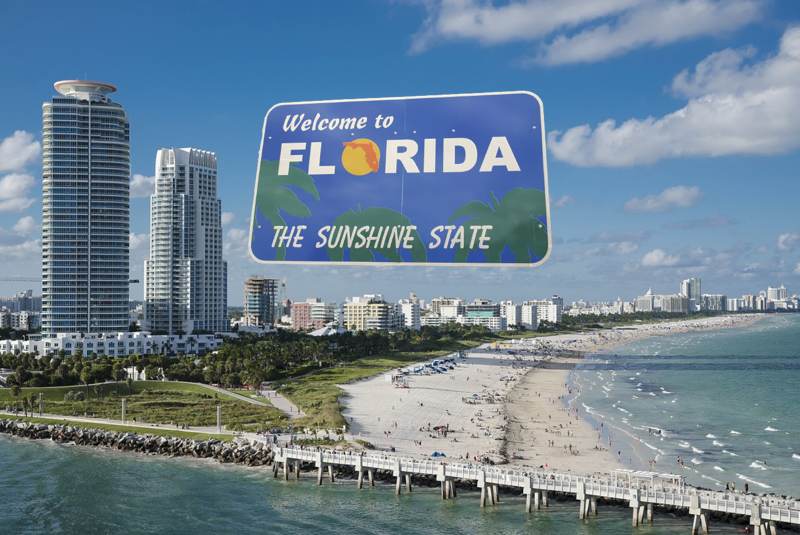 The launch marks an expansion of the company’s activities in the state and reflects its strategy of linking insurance pricing to property-level resilience improvements.
The new offering is designed around the idea that homeowners can reduce both their exposure to hurricane damage and their insurance costs by making targeted upgrades to their properties. Rather than relying primarily on historical loss data and geographical risk assessments, Stand says it evaluates how specific building features influence a home’s ability to withstand severe weather events.
At the centre of the programme is the company’s proprietary Stand World Model, a physics-based platform that analyses how catastrophic events interact with individual structures. According to Stand, the technology examines a property’s characteristics to estimate how it may perform under extreme conditions and identifies areas where resilience can be improved. The model was initially developed and tested in California communities exposed to wildfire risk and has now been adapted for hurricane-related hazards in Florida.
Stand also provides support to homeowners seeking to strengthen their properties. The company works with approved contractors, helps identify suitable mitigation measures and assists with coordinating improvement projects. For certain early customers, Stand is offering smart water leak detection devices and covering the first year of monitoring costs. The company has additionally secured discounted rates through selected contractors and may provide financing assistance for eligible mitigation work.
The insurer says homeowners who complete qualifying upgrades may receive long-term premium reductions. Depending on the property’s characteristics and the improvements undertaken, measures such as installing roof anchor clips and water shut-off valves could reduce homeowners’ insurance premiums by as much as 40%.
The launch represents Stand’s first open-market insurance product in Florida. The company previously entered the state through Florida’s Citizens depopulation programme, which transfers policies from the state-backed insurer of last resort to private market carriers. Stand says the new product is intended to broaden insurance options for qualifying homeowners outside that framework.
Florida has faced sustained challenges in its property insurance market, with repeated hurricane losses placing pressure on insurers and policyholders alike. Rising claims costs and carrier failures have contributed to growing reliance on Citizens over the past two decades. According to Stand, the state has experienced 94 weather and climate disasters causing at least $1 billion in damage since 1980.
Commenting on the launch, Dan Preston, co-founder and chief executive officer of Stand, said: “Aerospace engineers have modelled how wind tears apart structures for decades, and that science is at the core of how we think about home safety. We’re bringing that same rigor to Florida by working with homeowners to understand what makes their homes stronger and rewarding them for taking action, instead of just charging them more because of where they live.”
Stand said its Florida business is supported by a team with extensive experience in the state’s insurance sector, while its applied physics division combines expertise in aerospace engineering, machine learning and 3D modelling to assess catastrophe exposure at the level of individual homes.
The company underwrites and services policies issued by Concert Specialty Insurance Company, which holds an AM Best financial strength rating of A-, in California, and by Stand Insurance Exchange, which is rated A by Demotech, in Florida. Stand said its insurance programmes are supported by a panel of highly rated reinsurance providers, including Arch, RenaissanceRe, Hannover Re, Nephila and Hiscox. The company is backed by investors including Eclipse, Inspired Capital and Lowercarbon.