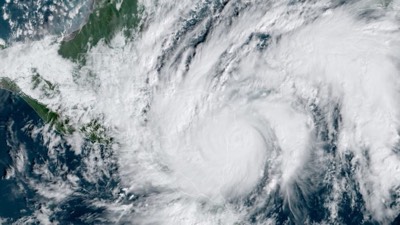
In a recent update, Tropical Storm Risk (TSR) has raised its forecast for the North Atlantic hurricane activity in 2023, anticipating a season that could be around 10% above the 1991-2020 climate norm.
 This adjustment comes as meteorologists closely monitor various climate indicators and atmospheric conditions.
The updated forecast predicts an Accumulated Cyclone Energy (ACE) value of 140, surpassing the 30-year norm of 122. Additionally, TSR indicates a 33% probability of an above-normal North Atlantic ACE in 2023, a 54% chance of a near-normal ACE, and a mere 13% likelihood of a below-normal ACE season.
Experts at TSR point to the July-September trade wind speed as a significant factor contributing to the revised forecast. While El Niño conditions persist, the trade winds have exhibited an unexpected trend, being slightly weaker than usual.
This phenomenon suggests more favourable atmospheric conditions may persist through August and September, potentially enhancing hurricane activity.
The forecast predicts the formation of 3 intense hurricanes, 8 hurricanes, and 18 tropical storms. This contrasts with the 1991-2020 30-year averages of 3 intense hurricanes, 7 hurricanes, and 14 tropical storms.
The primary driver behind this raised forecast is the warmer-than-average sea surface temperatures in the tropical Atlantic, which are expected to create conducive conditions for heightened hurricane activity.
Despite the confidence in certain factors, TSR emphasises the existence of sizable uncertainties. While sea surface temperatures are projected to be significantly warmer than average, uncertainties surround the trade wind predictor’s potential for enhanced hurricane activity.
Moreover, the influence of unpredictable variables such as Saharan air outbreaks over the tropical Atlantic further complicates the accuracy of the forecast.
TSR’s final update for the 2023 North Atlantic hurricane season underscores the dynamic and complex nature of predicting hurricane activity.