An updated 2023 Atlantic hurricane season forecast released by the Colorado State University (CSU) anticipates more tropical cyclone activity than previously projected.
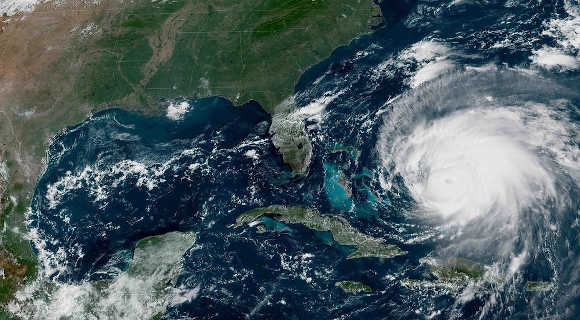
Source: NOAA
In June it was reported that CSU was anticipating 14 additional named storms rather than 13, as well as seven hurricanes instead of six, and three major hurricanes as opposed to two. However, it is now being reported that CSU is now projecting eight named storms (including the four that have already formed), as well as nine hurricanes and four major hurricanes.
The forecast is led by Phil Klotzbach, PhD, an Insurance Information Institute (Triple-I) non-resident scholar and a senior research scientist in the Department of Atmospheric Science at CSU.
Major hurricanes are defined as those with wind speeds reaching Category 3, 4 or 5 on the Saffir-Simpson Hurricane Wind Scale.
In June three named storms: Arlene, Bret and Cindy, formed in the Atlantic basin, while an unnamed subtropical storm formed in January.
According to the National Oceanic and Atmosphere Administration (NOAA), fourteen named storms, seven hurricanes, and three major hurricanes develop in a typical year.
“We have increased our forecast and now call for an above-average Atlantic basin hurricane season in 2023, although uncertainty with this outlook is larger than normal. While we continue to anticipate a robust El Niño for the peak of the Atlantic hurricane season, most of the tropical and subtropical Atlantic now has record warm sea surface temperatures,” Klotzbach said
He continued: “El Niño increases vertical wind shear in the Caribbean and tropical Atlantic, but the extreme anomalous warmth in the tropical and subtropical Atlantic may counteract some of the typical El Niño-driven increase in vertical wind shear.”
In addition, the probability of a major hurricane landfall along the coastlines of the continental US this season is estimated to be 50% which is above the long-period average (1880-2020) of 43%.
“Those residing in hurricane-prone states should take steps now to reduce their risks from wind and water-caused property damage,” said Sean Kevelighan, CEO, Triple-I.
“If they haven’t done so already, homeowners, condo owners, renters, and business owners should review their policies with an insurance professional to make sure they have the right types and amounts of coverage. That also means exploring flood insurance since flood-caused damage is not covered under standard home, condo, renters, or business insurance policies.”
Last year two hurricanes made continental US landfalls, including Category 4 Hurricane Ian, which struck Florida’s southwest Gulf Coast in Lee County on September 28 with 150 miles per hour (mph) sustained winds.
Then, on September 30, Ian made a second landfall as a Category 1 with 80 mph winds in South Carolina.
Florida was also struck by Category 1 Hurricane Nicole along the state’s Atlantic Coast on November 10, a rare November landfalling hurricane that made landfall near Vero Beach with winds reaching up to 75 mph.