The Caribbean Catastrophe Risk Insurance Facility (CCRIF) has announced that it is collaborating with The University of the West Indies (The UWI) in an effort to reduce the impacts of wildfires on the people, communities, and the economy of Barbados.
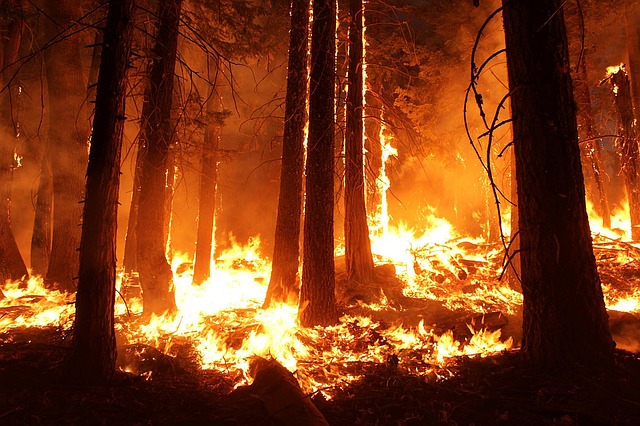 According to the announcement, CCRIF has provided a grant of approximately US$25,000 to the Centre for Biosecurity Studies at The UWI, Cave Hill Campus for a project focused on understanding the impact of climate change and wildfires in Barbados.
Moreover, to date, project funds have been used to purchase drones to collect data on wildfires which is then used to enable the Barbados Fire Service to develop “evidence-based strategies” to address fire-related risks.
On September 28, The UWI handed over four drones to the Barbados Fire Service to aid in their firefighting efforts.
It has also been confirmed, that through the project, Fire Service officers will participate in training on how to use this drone technology, in order to better coordinate wildfire monitoring from an aerial view.
In addition, CCRIF has also provided funding for the procurement of 10 air pollution sensors, which are said to be donated to the Ministry of Health to assist in their monitoring of air pollution levels, as well as to determine the impact of wildfires on air pollution.
The sensors will be installed at strategic locations, such as wildfire “hotspots”, near to residential communities that are at risk of wildfires.
CCRIF CEO, Mr. Isaac Anthony commented on the project: “At CCRIF we will continue to provide resources for the implementation of projects like these across the Caribbean. These projects that are part of our Small Grants Programme are key to building the resilience of our people, communities and organizations to natural hazards and climate change. Since 2015, CCRIF has provided over US$3 million for projects being implemented by civil society organizations, academic institutions and governments across the region.
“The focus of our funding includes the rehabilitation of ecosystems; climate-smart agriculture; hazard-resilient construction; nature-based solutions; and climate change adaptation – with all projects including capacity building components. We are desirous of doing more under our small grants programme and scaling up our support and we encourage NGOs from across the region to apply for grants throughout the year via our small grants platform at https://www.ccrif.org/ccrif-small-grantsprogramme.”