Infrastructure debt has become the leading private market priority for European insurers, with 58% planning to increase allocations, according to new research from Novantigo, a financial services research, analytics and strategic consulting firm specialising in the European insurance, private markets and private wealth sectors.
 The findings are published in Insurance Asset Management in Europe 2026, Novantigo’s latest annual study of the European insurance asset management market. The research found that direct lending is also expected to experience strong growth, with 46% of insurers intending to increase exposure, while 38% plan to allocate more to private placements.
Novantigo’s findings are based on a survey of 143 insurance investment professionals responsible for €4.1 trillion in assets. Conducted during the second quarter of 2026, the research covers insurers across the UK, France, Germany, Italy and Switzerland, alongside 25 executive interviews. The study also maps 200 segregated mandates and 148 fund investments expected within the 2026 pipeline.
According to Novantigo, recent regulatory developments are reshaping investment priorities. Amendments to the Solvency II Delegated Regulation came into force on 10 March 2026 and will become fully applicable from 30 January 2027. Industry research indicates that the changes could release between €70 billion and €90 billion of capital across the European insurance sector.
Against this backdrop, Novantigo’s analysis shows structured credit emerging as one of the most significant areas of opportunity. The firm found that structured products account for almost 40% of all new private market mandates and fund investments identified for 2026.
Novantigo attributes this renewed interest largely to the Solvency II review, which improved the capital treatment of high-quality Simple, Transparent and Standardised (STS) securitisations and selected collateralised loan obligation (CLO) exposures. The firm says these changes have made such investments more attractive for insurers seeking stronger returns while using capital more efficiently.
Novantigo also believes the expansion of structured credit creates opportunities for specialist asset managers that are not currently working with insurers. As many insurers have limited in-house expertise in structured products, the firm suggests they are more likely to conduct competitive manager selection processes rather than extend existing mandates, creating opportunities for new specialist providers.
The research highlights differences between insurer types and organisation size. According to Novantigo, 47% of non-life insurers expect to increase allocations to structured credit, compared with 36% of life insurers. Larger insurers with more than €50 billion in assets under management are also more likely to target allocations of between 11% and 15%, while insurers managing less than €10 billion remain more cautious because of the greater operational and reporting demands associated with these investments.
Novantigo’s executive interviews broadly support this positive outlook, although participants indicated that adoption is likely to develop gradually and at varying speeds across the sector.
The report also examines where new business opportunities are expected to arise. Novantigo found that, on average, 48% of insurers’ private asset allocations are managed by external specialists, representing the highest reliance on third-party managers across any asset class on insurers’ balance sheets.
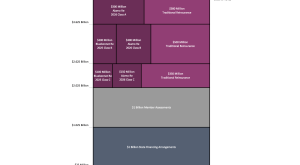
According to Novantigo, European insurers expect to award 385 new mandates and fund investments during 2026, compared with 524 in 2025. Private markets account for 31% of the total investment pipeline.
Within this pipeline, Novantigo identified structured credit as the largest opportunity, representing around 38% of all new private market segregated mandates, equivalent to 23 of the 61 mandates identified.
The research also points to a strong preference for incumbent managers. Novantigo found that 72% of new mandates and fund investments are expected to be awarded to existing managers, an increase of around nine percentage points compared with last year’s survey. Italy stands out as the most accessible market for new entrants, where 32% of mandates are expected to result in new manager appointments.
André Schnurrenberger, CFA, Co-Founder and Managing Partner, Novantigo, commented: “The capital treatment of long term equity and structured products has improved enough to change what insurers actually can and want to own.
“What has narrowed is the pool of business a manager can compete for, because insurers would rather add to a firm they already have than onboard a new one. Structured credit is the exception. Most insurers cannot staff it internally and have no existing third party manager onboarded yet, so they have to run a search, and that is where this year’s new appointments will come from.”
Novantigo also assessed insurer perceptions of asset management brands. Among the 29 firms included in the survey, Blackstone received the strongest support, with 73% of insurers saying they would be likely to select the firm as a preferred provider for private assets. Apollo followed at 62%, with BlackRock and CVC each on 51%, PIMCO on 45% and J.P. Morgan Asset Management on 43%.
The research also found that familiarity does not necessarily correspond with perceived insurance expertise. Novantigo reports that BlackRock is recognised by 97% of insurers surveyed, while J.P. Morgan Asset Management is familiar to 93%. By comparison, 43% of respondents said they had not heard of Ostrum.
Justina Deveikyte, CAIA, Co-Founder and Managing Partner, Novantigo, added: “Private assets is the one place in the survey where insurers name specific firms, and Blackstone at 73% is well clear of the field. We checked whether that preference shows up in real business, against the 90 investments insurers named for 2026. At the top it does: Blackstone first, Apollo second, on both measures. After that it breaks down. KKR was not even in the brand set we tested and still finishes third on actual mandates, and CVC is third on preference without a single named mandate.”