

The primary challenge facing the insurance market is the deeply interconnected nature of today’s geopolitical and technological landscape, Rachel Turk, Lloyd’s Chief of Performance & Strategy, highlighted during AM Best’s recent Europe Insurance Market Briefing in London.
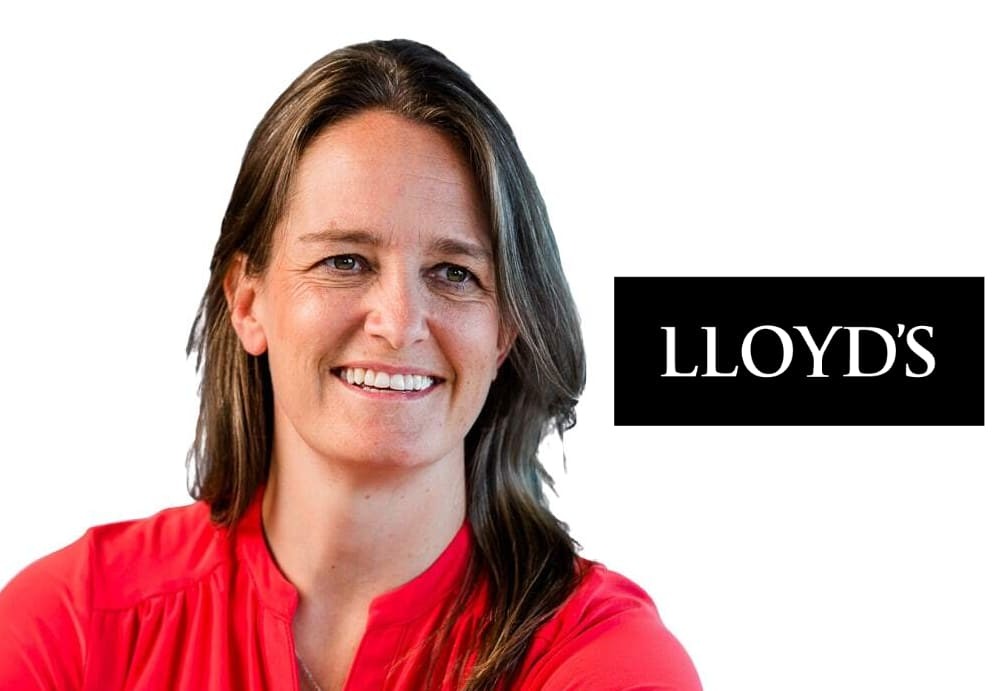 Turk stressed that geopolitical events can no longer be viewed in isolation. Supply chain disruptions, technological choke points (such as Taiwan’s semiconductor industry), and conflict regions like the Middle East cascade across global trade and energy infrastructure.
Because of this, she argues that modern underwriters must become “geopolitically aware” to anticipate trade impacts, market shocks, and strict liability issues.
The executive urges the market to be more “risk aware and not risk off,” with the fundamental mindset that the “objective should be to find a way to say yes to insuring this, rather than finding reasons to say no.”
“The only way you can do that is to genuinely understand the environment in which we are operating, even when it’s becoming a bit more complicated,” she added.
Turk highlighted geopolitical divergence – particularly shifting alignments among the UK, EU, and US – as a critical threat, especially concerning Russian sanctions and maritime shipping, and noted that its complexity demanded absolute contractual transparency.
On emerging exposures such as AI, she said that these cannot simply be excluded: “With AI risk, to be honest, it doesn’t go away just because we exclude it, there has to be a more intelligent way to think about AI risk and think about the coverage.”
Turk’s warning to the industry centred on stagnation, pointing out that the last major new insurance product created at scale was cyber, around two decades ago.
If insurers continue offering fragmented policies instead of a holistic protection for modern vulnerabilities – like intellectual property digital infrastructure, AI, supply chain continuity – they might become irrelevant, she warned.
“That is my massive fear for the insurance industry, but unless we start thinking around, what’s going to have the client want to buy the product, we will end up becoming more irrelevant. And the danger is, and we’ve seen what’s happened in the past, if we don’t meet the client where they are they put risk into captives. When risks go into captives, they very rarely come back out again,” the executive stated.
To prevent this, insurers must leverage the concentration of market capital and expertise to design tailored products for clients.
Turk suggested five key priorities to manage geopolitical risk in an uncertain world.
She explained: “Firstly, know what you’re covering. Clarity matters, whether that’s regarding war, AI risks, sanctions and systemic exposure. There’s one certain thing; ambiguity never ever favours the insurer in a court of law.
“Understand the whole portfolio. Exposures can move through portfolios at lightning speed due to the interconnected nature of risks. So, whilst you might be considering exposure and risk in one area, it could actually flow through your entire portfolio. You need to be able to understand your portfolio: construction, accumulations, aggregations, etc.”
Pricing for reality and maintaining rate adequacy is also key, she explained, alongside being honest about the margins that remain and actively challenging assumptions as conditions change.
Number four concerns acting before results force you to. Risk profiles are constantly changing, so insurers must adjust before the results force them to, Turk suggested, and before Lloyd’s has to step in to remediate policies and portfolios.
“Finally, protect your ability to be ambitious. And what I mean by that is, unless we remain profitable as a marketplace, we can’t do any of the fun stuff and maintain our relevance, in my view. So, therefore, you have to think about margin, think about profitability, think about portfolio optimisation, all of that. In my view, protect the ability to be ambitious.”
Turk concluded: “Ultimately, the nature of risk will continue to change. Is there more risk, less risks? It is open to debate. I think it is the same amount. I think it’s just different, but I think the role that we have does not change. Our role for insurance is to provide more certainty to clients; it is to take risks from them so they can do what they do best.
“Being risk aware is leaning in, risk aware is continuing to try and find a way to say yes. Being risk off is turning around and excluding things because we don’t want to do it, and that provides zero value to clients. We have to find a way to continue to be risk aware. That does not mean just boldly taking all risks, it is taking the right risk considering it is the right price.”