Bloomberg Intelligence (BI) warns that insurers seem poorly prepared for the increased loss frequency and intensity wrought by flooding and climate change as this year’s North Atlantic hurricane season approaches, with pricing and risk appetite appearing badly aligned.
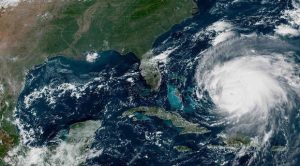
Source: NOAA
According to the data available, Munich Re and Swiss Re lead insurers that have now had three years in a row of insured losses over $100 billion.
Kevin Ryan, a Senior Industry Analyst in Insurance at Bloomberg Intelligence, said: “Hurricane Ian destroyed at least 2.3 million homes in Florida. However, most of the damage was from storm surges and heavy rain, with less than 20% of Florida homeowners insured against flooding. The economic loss will likely be much higher than the insured loss, at $95 billion. The scale of Hurricane Ian’s losses, particularly in Florida, will likely mean insured losses will drift higher as inflation and litigation add to the toll. Ian is the second most-costly hurricane after 2005’s Katrina, which cost insurers $99 billion on an inflation-adjusted basis.”
Though last year had fewer storms than in 2021, there was significant economic damage inflicted. The 2022 Atlantic hurricane season consisted of 14 named storms, which is a near-average outturn following 2021 which was the fifth straight year of new highs. The 2021 season ranked third in named storms since records began, notes Bloomberg.
Ryan also added, “Insurance rates don’t appear to adequately reflect the threat of flooding as climate change brings more-intense rain events. Aon had 2022 insured natural-catastrophe losses of $132 billion, 57% more than the average since 2000. The biggest losses are getting larger, with many scientists blaming greater precipitation. Simply applying a multiple to historical large losses is likely to result in poor loss forecasts as more real estate is developed. However, it demonstrates potential problems.”
Even though 2022 only saw average global catastrophe losses, according to Ryan, the Australian floods in February and March caused a record $4 billion of insured losses for local insurers.
The report finds that insured natural-catastrophe losses rose quickly in 2021, with it becoming the fourth most-costly year since 1970, according to Swiss Re; 2020 was the fifth costliest.
European floods in July saw a record-high insured loss of $13 billion, according to Aon. Severe weather was also responsible for most of the big claims in 2022 – insured losses were above the 21st-century normal.
BI commented that, on average, flood losses were the third most-costly source of insurance claims over the past 20 years, after cyclones and severe weather. Catastrophic flood-loss events were the most-numerous peril globally in 2022. Insured losses from natural disasters reached $132 billion, with the US accounting for 75% of this, according to Aon in 2022.
Ryan carried on and said, “Though 2022 was one of the 10 lowest years for deaths from natural catastrophes since 1950, beyond North America and Europe, flooding is a major killer among natural catastrophes. It represents 23% of deaths in 2021, 43% of deaths in 2020, 40% in 2019 and 30% in 2018. In 2017 – the most expensive year on record for weather events – floods accounted for a massive 60%. Fatalities could be even higher should the severity of flooding increase in Europe and North America, as some scientists forecast.”
Although for the 2023 Atlantic hurricane season, CSU researchers are forecasting 13 named storms, six of which will reach hurricane strength, of which two are expected to become major hurricanes. This compares with the 1991 – 2020 average of 14.4 named storms, 7.2 hurricanes, and 3.2 major hurricanes. A major hurricane is category 3 strength or more, with sustained winds of 111 mph or greater.