While a growing body of scientific research suggests that increases in the severity and frequency of catastrophe events are man-made, the re/insurance industry remains focused on the impacts of social inflation and is missing the point on the influence of climate change on catastrophe risk, says the Chief Executive Officer (CEO) of RenaissanceRe (RenRe), Kevin O’Donnell.
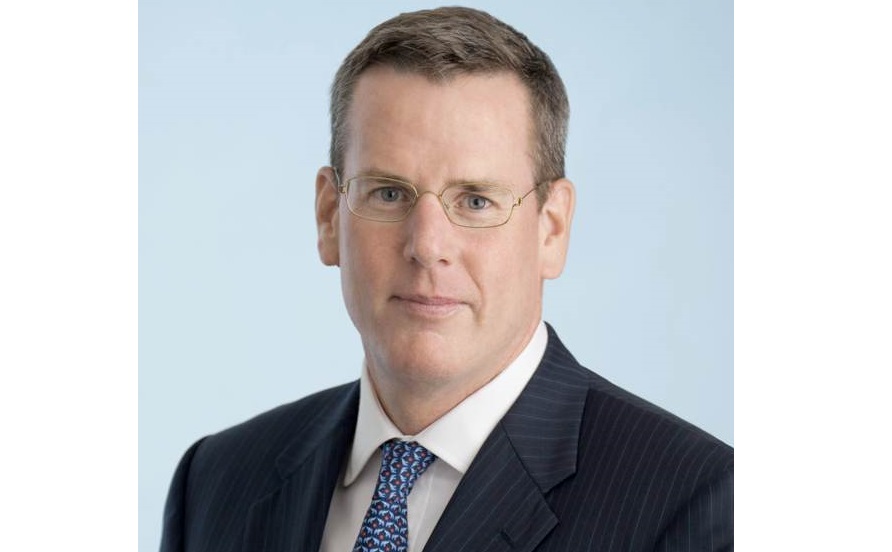 Speaking during Bermudian reinsurer RenRe’s third-quarter 2019 earnings call, CEO O’Donnell highlighted the recent Japanese typhoons and subsequent industry losses and loss creep, stating that the industry continues to struggle with climate change, deficient modelling, poor underwriting, and trapped capital.
After consecutive heavy loss years in 2017 and 2018, O’Donnell said that 2019 is continuing the trend.
“We believe that the frequency and severity of natural catastrophes has increased,” said O’Donnell. He continued to explain that while the reinsurer recognises that it’s hard to distinguish between permanent climate change from transient climate variability, an “ever-expanding body of scientific research suggests that these trends are in fact manmade.
“With each additional record breaking hurricane, typhoon, flood, and fire the evidence continues to mount that we live in a world where climate change is influencing the frequency and severity of catastrophes”
The RenRe CEO called on the industry to adapt to the new reality that if climate change is in fact influencing the frequency and severity of events, the trend will not revert to the mean but will instead worsen, leading to more extreme events.
“What we’re seeing is, or what we believe we are seeing is that this is a permanent shift in the climate, a paradigm. And with that, there will be no reversion to mean and what we are seeing now is likely to have normal variability, but at an inflated rate,” said O’Donnell.
He suggests that wind and rain risks could increase from tropical cyclones, a greater proportion of storms will reach Cat 4 or Cat 5 status, while rises in sea level will increase storm surge and the trend of increasing wildfires in California will persist.
Climate change and its potential impact on the severity and occurrence of natural disaster events has been a hot topic of debate across the risk transfer industry in recent times, driven by the hurricanes of 2017 and 2018, as well as severe flooding, extreme drought conditions, record breaking wildfires and a series of damaging Japanese typhoons.
Furthermore, events such as Dorian, Faxai and Hagibis show that by no means has 2019 been a benign loss year, despite a reduction on the previous two years.
But despite the awareness and ongoing discussion around climate change, O’Donnell said that the industry is perhaps too focused on the impacts of social inflation.
“From my point of view, the market is missing the point on the mounting influence of climate change on catastrophe risk. Rather, it remains focused on the impacts of social inflation.
“Social inflation undoubtedly remains a problem, one which I have addressed on multiple occasions and for the last several years that has materially increased on modeled loss. Having had a cat, social inflation makes the loss worse, but it does not make the cat any stronger or any more likely. Until recently, the damage functions of most cat models had not sufficiently captured the impact of social inflation and that is one of the reasons for substantial post-event losses,” said O’Donnell.
He added that although the social inflation trend is now more accurately reflected in increased damage functions in cat risk models, it’s becoming clearer that the benign cat loss decade experienced prior to 2017 was an extreme outlier.
“The current frequency and severity of catastrophic events are more typical and are being driven by climate change,” he said.
Adding, “Unlike social inflation, climate driven frequency and severity changes affect the hazard function of cat models. They make the cats stronger and more likely. I am not convinced that industry hazard functions reflect this new reality.”
So, while the damage function in cat risk models has done fairly well, it’s the hazard functions that O’Donnell feels are lagging and it’s not as simple as just shifting the risk curve higher for an Atlantic hurricane, for example.
“What you need to do is think about how the variables affecting storm will change the types of storm one expects to see,” explained O’Donnell.
Adding, “So it’s a much more nuanced way to think about it, but it’s one in which I think recognising that if you’re simply extrapolating from an historic curve, we believe there is a miss-factor that doesn’t contemplate the way the world is changing with regard to climate change.”
The reinsurer’s third-quarter 2019 profits fell on the back of increased catastrophe losses, and the CEO highlighted the potential influence of climate change on more landfalling typhoons in Japan.
In its results announcement, RenRe said that it expects Typhoon Hagibis to have a net negative impact on its net income of approximately $175 million on its Q4 results, which is a much greater impact than what the firm experienced from Faxai in Q3.