With the official start of the 2018 hurricane season due on June 1st, a forecast based on new satellite data and model upgrades indicates a 75% chance of a normal/above-normal 2018 Atlantic hurricane season, NOAA’s Climate Prediction Centre says.
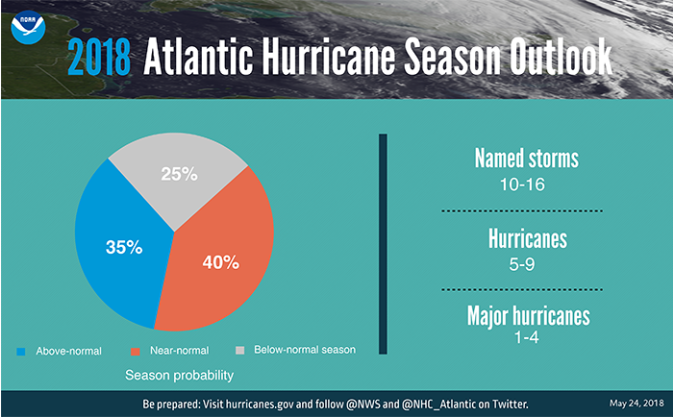
 An analysis of data by forecasters for the upcoming season- which extends from June 1 to November 30- produce a 35% chance of an above-normal season, 40% chance of a near-normal season and 25% chance of below-normal.
Additionally, seasonal hurricane outlooks for the eastern and central Pacific Basins have been issued by NOAA. This includes an 80% chance of a near/above normal season for both Eastern and Central Pacific regions, a 70% probability of 14 to 20 named storms- of which 7 to 12 will become hurricanes- and a 70% chance of 3 to 6 tropical cyclones, including tropical depressions, tropical storms and hurricanes for the Central Pacific.
Secretary of Commerce, Wilbur Ross, commented, “With the advances made in hardware and computing over the course of the last year, the ability of NOAA scientists to both predict the path of storms and warn Americans who may find themselves in harm’s way is unprecedented. The devastating hurricane season of 2017 demonstrated the necessity for prompt and accurate hurricane forecasts.”
The probability of 10 to 16 named Atlantic storms, with 5 to 9 becoming hurricanes, including 1 to 4 those major hurricanes, has been predicted 70% likely by NOAA forecasters.
An average hurricane season will typically produce 12 named storms, of which 6 become hurricanes, including 3 major hurricanes.
Near-average sea-surface temperatures across the tropical Atlantic Ocean and Caribbean Sea, as well as the potential of a weak El Nino developing, are two major driving factors in this outlook.
These factors are set upon a backdrop of atmospheric and oceanic conditions that are conducive to hurricane development and have been producing stronger Atlantic hurricane seasons since 1995.
Neil Jacobs, Ph.D., Assistant Secretary of commerce for Environmental Observation and Prediction commented, “NOAA’s observational and modeling enhancements for the 2018 season put us on the path to deliver the world’s best regional and global weather models. These upgrades are key to improving hurricane track and intensity forecasts, allowing NOAA to deliver the best science and service to the nation.”
Acting FEMA Deputy Administrator, Daniel Kaniewski, concluded, “Preparing ahead of a disaster is the responsibility of all levels of government, the private sector and the public. It only takes one storm to devastate a community so now is the time to prepare. Do you have adequate insurance, including flood insurance? Does your family have a communication and evacuation plan? Stay tuned to your local news and download the FEMA app to get alerts, and make sure you heed any warnings issued by local officials.”
One named storm has now already having occurred before the official start of the 2018 Atlantic hurricane season, after sub-tropical storm Alberto formed and took aim at the Florida Panhandle.