The Fidelis Partnership has replaced the traditional ‘Underwriting Assistant’ title with ‘Analyst’ to reflect a shift towards developing future underwriters focused on innovation, faster decision-making, and client relationships, as AI increasingly automates menial administrative tasks.
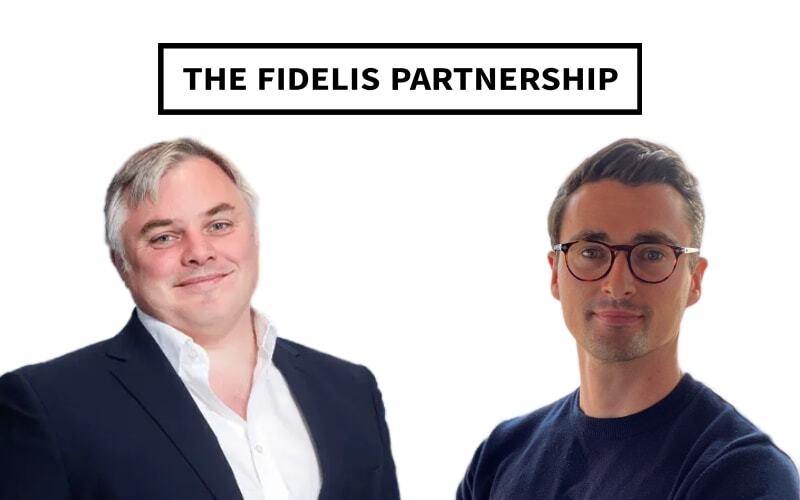 In an interview with Reinsurance News, Michael Davern, UK CUO, Group Head of D&F Property, Energy & Construction, and John-Paul O’Hare, Group Director of Underwriting at The Fidelis Partnership, discussed the reasoning behind the new ‘Analyst’ job title and how the change reflects its wider AI integration strategy.
O’Hare highlighted, “The world’s changing and it’s changing at a faster pace because of AI technology and automation, in a way the industry has never experienced. It’s been really noticeable over the past 12 months, with the advancements in AI technology and businesses embedding AI agents in their workstreams.”
In light of this shifting technological landscape, O’Hare and Davern noted that menial tasks are becoming increasingly automated by AI, removing friction and increasing submission volumes, allowing analysts to see more, process more, make faster decisions, and provide better service to brokers and clients. That allows the business to scale more efficiently, supporting higher margins, and a reduced headcount.
Davern explained, “Historically, Underwriting Assistants across the industry were there to do data entry jobs for the underwriter. It’s a menial part – it’s a long hard slog and it begs the question of what capabilities firms have been recruiting for.
“We at The Fidelis Partnership view ourselves as the Goldman Sachs of insurance, and the title of Analyst now far better represents the evolving entry level role and the skillset we are recruiting for in candidates coming in as a graduate or even from school.”
O’Hare emphasised that what they’re really trying to do at The Fidelis Partnership is “develop and build the underwriters of the future.”
He continued, “And that isn’t doing double keying, triple keying; it isn’t copying information into policy admin systems and pricing models. That should all be automated, which is a capability that The Fidelis Partnership has already built and developed. We have multiple classes of business in which, when a submission comes in, it now directly and automatically flows through the pricing models, underwriting logic and wording logic to arrive more quickly and efficiently at: ‘okay, now time to make a decision.’
“Backed by these AI capabilities, the analysts we’re bringing in now are removing friction. Submission volumes can go up; analysts can see more, process more, and make faster decisions. That in turn means better service for clients and brokers. It means more time to spend on innovating and developing new products. And it means more time to travel and build relationships with clients in person and unlock new distribution sources, something we are actively doing as part of our High Growth Markets strategy.
“I would say underwriters of the future need to start as analysts so that they can disrupt and enhance these processes through automation and get to do the more valuable work faster. I expect the underwriters of the future will have a broader skill set, combining underwriting expertise with technology, analytics, and relationship management. AI and automation will allow talented individuals to handle greater deal flow and focus on higher-value decision-making, while still learning within experienced underwriting teams.”
Davern described the type of skill set The Fidelis Partnership is looking for in the role of Analyst as those with ‘disrupter’ traits and said the firm has had great success in finding this talent through partnerships with the University of Limerick, Queen’s University Belfast, University College Dublin and Queen Mary University London. These partnerships span scholarships, co-ops, placements and graduate schemes, feeding analytical and technology talent directly into underwriting, actuarial, IT and claims teams
“In the people that we look for, we call them disruptor traits. They don’t have to be graduates, but it’s those who are motivated, those who view the world in a different way, perhaps those with language skills or strong relationship management skills,” Davern explained.
O’Hare went on to highlight the firm’s AI strategy, which includes leveraging automation to make front-end processes as efficient as possible, with some of this achieved through direct collaboration with brokers, including its recent strategic partnership with broking group Howden to automate the pre-bind submission process.
“Our AI strategy recognises that the operational efficiencies created by automation in turn support the scalability of our risk allocator business model. AI is empowering Analysts to make processes super efficient, to deliver the best quality service to brokers and clients, and then to allocate the best risks from our leading underwriting to the right capacity. Automation means that we can scale this model rapidly without needing to add new people, as would have been the case before. It means we are not just more efficient but also more scalable,” he concluded.