South Africa re/insurers and government will have to adapt pricing and policies and step up risk mitigation efforts after the recent Cape Town wildfire, that’s expected to cause a hardening of the market, demonstrated the growing risk of increasing size and scale of severe weather events.
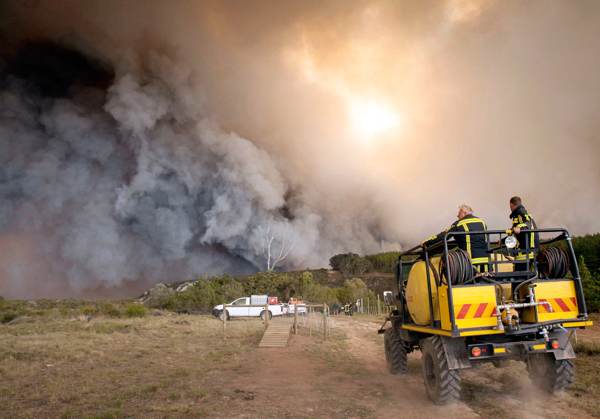
Image: NY Times
Christo Rautenbach, a coastal modeller at the University of the Western Cape and honorary research associate at the University of Cape Town, said models indicate that the frequency of one storm event every 30 years is likely to change to one storm event every three years, Business Live reported.
This means that to remain competitive and profitable, re/insurers operating in the region are going to have to step up both adaptation of underwriting and efforts to mitigate risk – examining current practices of local authorities and how to work together to minimise future severe weather events, such as wildfire.
Share prices of Santam and Rand Merchant Investment Holdings, which owns Outsurance, haven’t yet recovered to pre-Cape Town storm levels.
Initial estimates show insured losses could reach a record-breaking rand 4 billion, U.S. $300 million, cutting a considerable chunk out of insurer’s profitability and underwriting results this year.
And while the industry could be forced to pass on more cost of risk to policyholders, John Melville, executive head of risk services at Santam, said premium increases arising from the Cape fires and storms are unlikely to be extreme, Business Live reported.
For the first time in many years, the Cape town fire has turned the market cycle, causing otherwise dropping rates to harden.
And with climate science predicting an increase in weather events of the recent Cape town wildfire scale in future years, the danger for re/insurers, clientele, and governments is that in some regions this could cause underwriting prices to soar to such a level that policyholders can no longer afford to purchase cover, potentially leaving increasing areas uninsurable and thus more likely to be destitute in the aftermath of a natural disaster.
Rautenbach said; “increased risk from extreme weather events could lead to some areas being uninsurable, but it is more likely to drive greater engagement between insurers, policyholders, local authorities and brokers to mitigate risk proactively.”
Re/insurers who have adapted to the increasing scale of risk with a more sophisticated risk management function are likely to emerge as the strongest competitors in the market of the future.
The challenge for re/insurers now is to ensure policy and prices are sufficiently adapted to the growing weather risks, and to recognise the growing role risk mitigation will play in high-risk zones – to prevent market losses through regions and risks becoming uninsurable.
In the beginning of June, Cape Town was hit with its worst storm in 30 years and more than 26 fires sent the region surrounding Knysna up in flames, causing millions of rand worth of property damage and the evacuation of around 10,000 people.
Reinsurance programmes have helped to cushion the losses to insurers, however, their shrinking profit margins could make them highly vulnerable to any further natural catastrophe blows this year and lead to additional reinsurance purchases to protect carriers as they adapt to evolving risks.