Javier San Basilio Pardo, General Manager at global reinsurer Mapfre Re, expects the way the reinsurance industry handles relationships to shift in the coming years, and also anticipates a drive for more customised solutions.
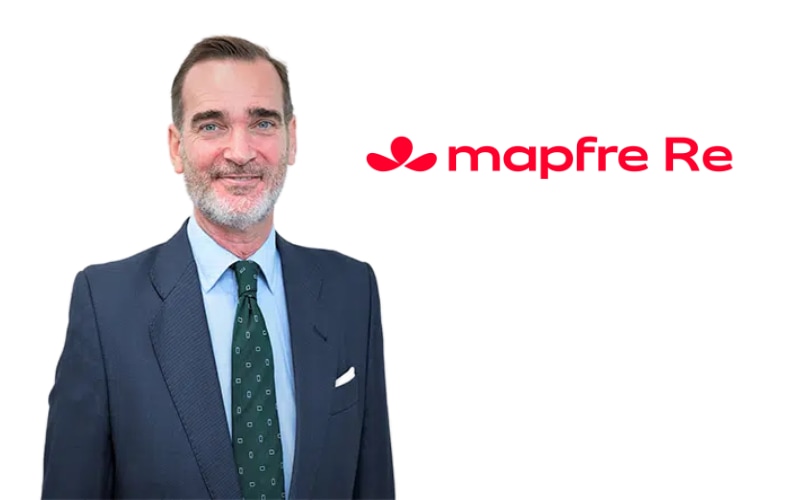 Reinsurance News spoke with San Basilio at RVS 2026 in Monte Carlo about a range of industry topics, including what he thinks will be among the biggest drivers of change in the space over the next few years.
“I think the way we handle relationships is what’s going to change,” he said. “The way in which we have more quality relationships than pure standard relationships.”
In the current softening and extremely competitive environment, relationships and partnerships have been a key theme of this year’s RVS, and San Basilio emphasised that clients should view Mapfre Re, now the 12th largest reinsurer in the world according to S&P Global Ratings, as a strategic partner rather than a pure claims paying partner.
He also expects the ability to have more customised solutions for clients to drive change across the reinsurance industry, noting that risks are constantly growing.
“The ability to grow across lines, across geographies, develop strategic solutions with complex clients is, I think, very attractive for them,” said San Basilio.
At the 68th edition of RVS in Monte Carlo, pricing and structures have of course been a hot topic for Mapfre Re in discussions with clients.
“For us, pricing is always important. We’re also a buyer, so we know how important it is, and we understand how much it impacts your balance sheet,” said San Basilio. “Our main focus is how we can deliver a better product and a better service to our clients. Of course, profitability needs to be there. Growth is always an aspiration, but it’s not the only thing, sound results are even more important, and also consistency.”
Looking ahead to the key January 1 2027 renewal season, the executive said that with the meaningful price movements in property of the past few years, “in the majority of territories, rate-adequacy is still there despite recent softening.”
He continued: “In terms of price movements, we anticipate some stability with slight softening in some cases, but it will be on a treaty and on a client specific basis rather than the broad brush approach that we had in the past. Will it be as strong as it was last year at 1.1? We don’t anticipate it, but we’ll see how the system goes. We also have to remember that the hurricane season is not over. We haven’t had any major impact, but we might have a big single event, and it only takes one hitting the wrong place at the wrong time and with the wrong intensity.”
It’s been well documented that the firming of terms and conditions in 2023 was crucial for reinsurers, notably the lifting of attachment points as players moved away from frequency losses amid the increased frequency and severity of secondary perils.
For Mapfre Re and the market in general, explained San Basilio, attachment points are holding in general.
“Are they holding when you consider inflation? That’s one thing. And then are they holding when you consider some coverage widening in some treaties? That’s also another question. But in general, overall, they’re mainly holding,” he said.
“We’ve seen some more action in spread loss covers and things like that, but it’s not the old frequency products that were being hit every year. They are more sophisticated and better structured deals. But just bringing attachment points down strongly just for the sake of doing it, I don’t think it’s going to happen. I think companies have preferred, in the past few years, to save money and build a bank internally,” he added.
We also asked San Basilio what cedents are looking for today from Mapfre Re beyond just capacity and pricing.
“Of course, capacity and pricing are important, but then it’s reliability. There’s partnerships. There’s predictability. They want to know we’re going to be there after a bad loss. They want to know more or less what our involvement in any coming year will be. They want to know where we feel comfortable, and we want them to tell us where they need us.
“So, for us, broader partnership, and it doesn’t mean that you have to go direct to the clients. We have many direct relationships, but we have many broker relationships that are still very strong. We want the client to tell us how they want to deal with us, and I think predictability and transparency is very important for the clients. They also want, of course, technical knowledge. They want us to propose them with solutions, and I think one thing they really appreciate, and it’s again something we value a lot when we are buyers, is across the board participation,” said San Basilio.