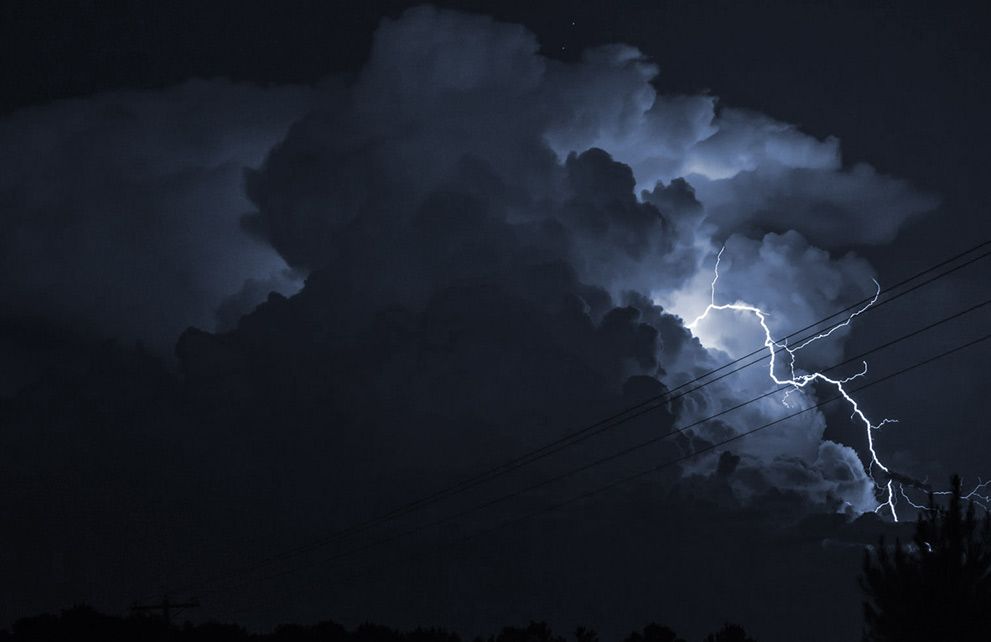

Renew Risk, a specialist provider of risk analytics for renewable energy and energy demand assets, has expanded its severe convective storm (SCS) modelling capabilities for solar farms to cover all 48 contiguous US states.
 The company says its model is the first in the United States designed specifically to assess the impact of severe convective storms on solar installations, enabling insurers to evaluate exposure to hail, tornadoes and straight-line winds across the mainland.
The expansion, announced in London on 21 October 2026, comes amid continued growth in the US solar market. The US Energy Information Administration expects developers to add a record 43.4GW of utility-scale solar capacity in 2026, 60% more than in 2025.
As the industry expands, Renew Risk is adapting its modelling to reflect changes in the size, location and technical design of solar installations. The company incorporates developments such as panel stow systems and tracking technology through seasonal model updates.
The increasing scale and concentration of solar projects present additional challenges for insurers. Larger installations can require greater investment to build and repair, while the proximity of multiple sites can increase the potential for one storm to affect several assets within the same portfolio.
Renew Risk points to hail as a particularly significant source of financial losses for solar operators and their insurers. A 2025 report by kWh found that hailstorms accounted for 6% of loss incidents at US solar farms but were responsible for 73% of financial losses.
Renew Risk’s expanded model enables insurers, reinsurers and brokers to assess three key severe convective storm hazards across the contiguous United States. The company has developed its hazard modelling using a detailed dataset with a 1km resolution, alongside asset-level vulnerability assessments that consider factors including panel construction, tracker systems and stow logic. Seasonal updates allow Renew Risk to incorporate new information as solar installations are built in additional locations and adopt different technologies.
According to Renew Risk, assessing severe convective storm exposure requires a different approach from modelling events such as hurricanes, which are often associated with low-frequency, high-intensity losses. Hailstorms can occur more frequently and cause damage across relatively small areas, making them difficult to assess using conventional catastrophe modelling approaches. Solar panels are particularly susceptible because they are largely constructed from glass, while limited historical claims data can make it harder to quantify potential losses, especially at remote sites.
These considerations are relevant to solar farms located in Hail Alley, a region in the central United States known for frequent hailstorms. Renew Risk initially concentrated its hail modelling on states with the greatest exposure. However, the company also identified tornadoes and derechos as important sources of potential damage. Derechos are long-lived windstorms that can generate widespread straight-line winds and have contributed to significant insurance losses involving solar installations.
Renew Risk cites the Midway Solar project, where losses were estimated at $70m, and Fighting Jays Solar Farm, where losses reached the $50m sublimit, as examples of significant severe convective storm claims. The expanded model now assesses hail, tornado and straight-line wind exposure within one framework across all 48 contiguous states.
The company says its modelling draws on research papers authored by the Renew Risk team examining solar farm risk, alongside its work with Vāyuh. The latter combines physics-based methods and artificial intelligence to model severe convective storms. Renew Risk’s focus on renewable energy assets is intended to support updates that reflect the engineering characteristics and changing risk profiles of solar installations.
Dr Joshua Macabuag OBE, Co-Founder and CEO of Renew Risk, commented: “Hail has rightly been the industry’s focus for solar, but many of the largest severe convective storm losses have been driven by tornadoes and straight-line winds. Insurers need to see all three perils together, across every state where they hold solar risk. That matters more as sites get bigger and closer together, because a single storm can now hit several assets in the same portfolio.
“Specialising in energy transition assets means we can build faster than traditional providers, without compromising on accuracy. Extending our model across the contiguous US gives our clients a full view of storm risk across their US solar portfolios, and the confidence to grow them profitably.”
The expanded capabilities are available through Renew Risk’s Global Onshore Renewables Product Suite. The company says insurers, reinsurers and brokers can use the offering to assess solar farm exposure to hail, tornadoes and straight-line winds throughout the US mainland.
The launch also coincides with a revised structure for Renew Risk’s wider product portfolio. The company has organised its models, data and services into three product suites: Offshore Renewables, which covers offshore wind and interconnectors; Onshore Renewables, which includes solar; and Emerging Demand, which focuses on data centres. These offerings are supported by Renew Risk’s Global Intelligence Platform, which includes the Industry Exposure Database.