Current reinsurance market conditions remain sustainable, but discipline is being tested particularly by abundant capital and increased competition in specific lines, according to Jamie Cook, Chief Partnership Officer, QBE Re.
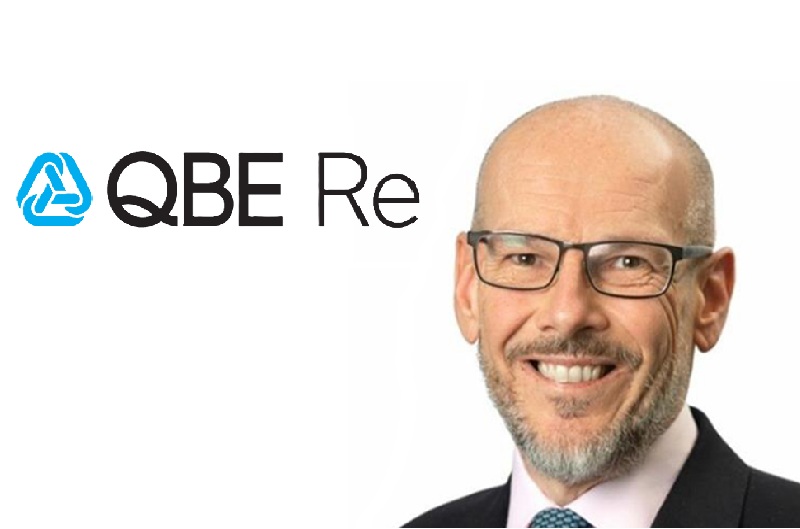 In a recent interview with Reinsurance News during our visit to Bermuda, Cook emphasised that maintaining cost of capital discipline is key.
“If we think back to the period 2017 to 2022, the industry didn’t meet its cost capital in terms of ROE. So, I think the way we would then translate that through to today is we probably view rate adequacy as the right lens, more than headline rate change.
“For us, the most important thing is that the business remains price adequate. From that perspective, I think we can still see prices decrease, but exceeding the cost of capital remains the most important issue,” Cook explained.
Beyond pricing, Cook identified structure, specifically attachment points, as being just as critical to market stability as price.
He said: “There was a large 2022-2023 reset of structures. For us, I think we’ve been consistent in how we talk about this. Structure is as important as price, and at the moment we see attachment points broadly holding, and I think that protects the economics for us and others in terms of a sustainable market.”
Terms and conditions, along with attachments, are challenging the market, and while discipline is holding, these pressure points need to be monitored, according to Cook.
The executive stated: “I think discipline is broadly holding. I think it’s being tested by increased competition in some lines, where capital is really quite abundant. But I suspect, or at least the way we view this, is that the real test is probably structure more than price.
“Terms & conditions and attachments are the real pressure point. At the moment they’re holding but I suspect that that’s something that we will continue to monitor very closely. For us, it’s portfolio quality over volume. So, where we see any reduction in adequacy of terms and conditions and attachments, I think that’s where we perhaps take a step back. They’re the trigger points for how we think about a portfolio, but at the moment we see those holding.”
Cook noted that different lines and geographies move independently, not as a singular reinsurance market cycle. This segmentation allows QBE Re to insulate itself from volatility in any single class.
“One of the things that we’ve been very conscious about and spoken about previously, is building a portfolio that’s well balanced and it’s got the right mix. So, I think we insulate ourselves to some degree from one particular class moving up or down by building a balanced portfolio,” Cook commented.
Adding: “So I think it’s very important to recognise that not every part of the market moves in the same cycle as the other.”
When looking toward future shifts in the market, Cook highlighted loss experience, exposure change, and structure as the three primary catalysis for change.
He said: “Our approach has been one of consistent stable growth over time, and we’ve built the portfolio to withstand that. But what typically changes the market is loss experience, exposure change and structure change.”
Against that backdrop, Cook reinforced that the focus remains on long-term partnerships built on insight, consistency and mutual value creation. In his view, disciplined underwriting combined with deeper client relationships is what drives cycle-resiliency at QBE Re.
Concluding: “We’re trying to build deeper and much longer, more enduring relationships with clients, and I think that overcomes some of the issues historically that reinsurance markets had. Buyers are increasingly favouring balance-sheet strength and multi-line support, shifting from a transactional view to a partnership view built on consistency and long-term stability.”