Insurers can no longer avoid the need to explicitly quantify geopolitical risk in their pricing, modelling and risk management processes, says Broadstone, the independent pensions, employee benefits, investment and insurance consultancy.
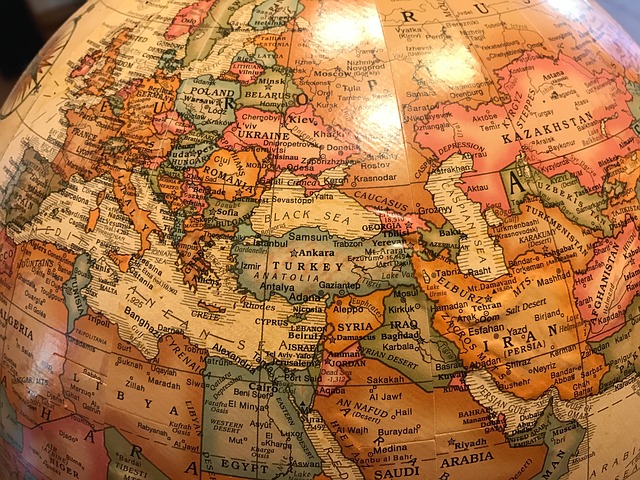 Broadstone’s latest Insurance Risk Monitor states that the current decade is shaping up to be one of the most unprecedented in recent memory, as the world emerges from the COVID-19 pandemic, there is the ongoing war between Ukraine and Russia, as well as conflict in the Middle East, with a risk of the latter escalating into a wider regional war.
At the same time, the world is also seeing autocratic nations forming alliances, threatening to push democracies across the world to “breaking point”.
The consultancy also noted that the Federal Reserve’s April 2024 Financial Stability Report found increasing geopolitical tensions are one of the main short-term threats to the financial system.
It also stated that further escalation of these conflicts could “increase inflation and economic volatility and reduce economic activity.”
However, this could wind up resulting in a reduction in risk-tasking and a reduction in asset prices, in turn leading to trading losses for businesses and investors.
Broadstone said that insurers are faced with the complex task of estimating the likelihood of further risks of increased geopolitical tension, which could include escalation of the wars in Ukraine and Gaza, as well as deterioration of the relationship between the United States and China.
The firm also names a civil war in the U.S., disorderly dissolution in the European Union, an invasion of Taiwan, a war between North and South Korea, or a major cyber attack and banking system failure, as further scenarios that insurers can consider.
An alarming point to note, Broadstone says that the likelihood of a global war is now potentially inside of the 1-in-200 year risk threshold for insurers’ capital requirements.
The impact on the global economy from these scenarios may include a global economic slowdown, high market volatility and disruption to global supply chains and energy markets, which could ultimately lead to loss in business volumes across all classes of business, high inflation and investment and operational losses, Broadstone warns.
Moving forward, the firm explains that to mitigate risks posed by geopolitical tensions, insurers can undertake scenario analysis as this will benefit from consultation with experts from outside the insurance industry, such as political analysts and security analysts.
Further, Broadstone said that insurers can use actuarial techniques to convert the subjective estimates from these
discussions into more holistic probability distributions and work out a potential range for the losses they might make under each scenario.
The consultancy explained that some key areas which will benefit from better quantification of geopolitical risk include the Own Risk and Solvency Assessment (ORSA), business planning, reserving, pricing, capital modelling, exposure and aggregate management, model validation, reinsurance purchase and underwriting.
The firm added that these results can also be used to assess whether the insurer’s Solvency Capital Requirement calculation remains appropriate in the current risk environment.
Bharat Raj, Head of London Markets at Broadstone’s Insurance, Regulatory and Risk division, commented: “The volatile geopolitical landscape at present is of huge global concern – especially the conflicts in Ukraine and the Middle East, which have been going on for a long period already. The potential deterioration between US and China relations also remains a significant risk.
Adding: “These are fast-moving situations with potential consequences that reach far beyond their borders and present a threat to economies across the world. Although direct losses from these events may be limited, for example through exclusions, insurers should not underestimate the potential knock-on impact on their businesses, which is likely to be material across all classes of business.”