In a recent Reinsurance News interview, Paul Templar, CEO of VIPR Solutions, and Tony Russell, Chief Revenue Officer, discussed the rapid expansion of the delegated authority market, Bermuda’s growing importance as a delegated underwriting hub, and the technology and data challenges facing the risk transfer industry.
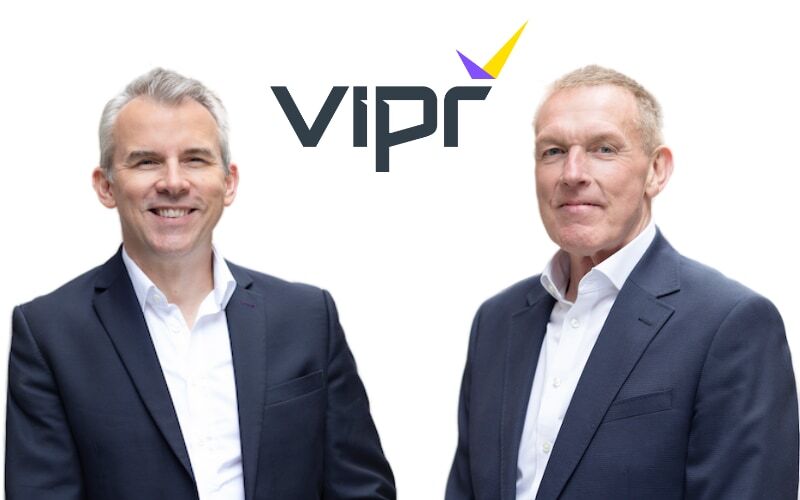 VIPR Solutions is a provider of technology designed to help the delegated authority market manage bordereaux data, improve transparency and streamline operations across the insurance and reinsurance value chain.
As the delegated authority and MGA market continues to experience strong growth, supported by increasing investment and the appeal of specialist underwriting models, Templar and Russell offered their thoughts on the sector.
“The MGA market is seeing significant private equity investment, and as a result, many underwriters at larger companies believe there is an opportunity to set up their own MGAs.
“So, we’ve seen a lot of specialist underwriters form their own specialist MGAs around the world. It is the fastest growing part of the industry at the moment. It is fair to say that, at around 20% per annum growth — roughly $260 billion globally — that level of growth is another attraction for people to set up their own businesses,” Russell explained.
He added that delegated authority offers insurers an efficient route to growth, allowing them to access specialist expertise and new territories without establishing a direct presence.
Russell continued: “What we’re seeing is that it’s a distribution channel that, if you can do it affordably and well, in terms of collecting and cleaning the data, is an excellent base from which to expand your business.”
Templar noted that current market conditions are also supporting growth. “In soft market cycles, as we’re just coming into, delegated is really attractive towards the carriers, they like that model a lot. It gives them certainty and protection against those soft market cycles. We do often see extra growth within the MGA space in those softer cycles,” he said.
The pair also highlighted the growing importance of delegated authority within major insurance markets. “The majority of managing agents and carriers we’re talking to around the globe have edicts to grow that part of the business, so every CEO we’re speaking to is focused on expanding distribution channels, but without any additional budget. As a result, they will need to automate, or at least streamline, how they collect and cleanse that data. That’s another driver for us, but it is certainly driving growth within the market.
“As I say, private equity has become involved in MGAs, which is positive, because it means they need to be more sophisticated in how they operate. We’re definitely seeing that in terms of the data they are now starting to send,” said Russell.
Templar added that in the US, studies indicate that there’s been four or five years of continual double digit growth in the MGA and programme space. “And in the UK, when we started to work in this area, about 30% of Lloyd’s gross written premium was being done through delegated arrangements. Today, that sits arguably above 45% and they’d like to get it to close to 50%, so it’s absolutely a trending topic,” he added.
While Bermuda has long been recognised as a global reinsurance centre, Templar believes it is also becoming an increasingly important market for delegated underwriting and programme business.
“We’ve been spending a lot of time in Bermuda over the last few years, and it’s an incredibly interesting and exciting market. I think it’s the closest thing that we’ve seen to the London insurance market in a foreign territory,” he said.
“If you look at the US or even Canada, quite often insurers are spread across a group of cities. In Bermuda, Hamilton is a real hub of activity, and the treaty quota share reinsurance space, which is really akin to the delegated side of things, is an area again that grows in line with the programme and the binder business, because it’s directly linked with very similar challenges,” he explained.
One of the challenges, according to Templar, is that a lot of the data that comes in needs to be both cleansed and standardised. “Other, unique challenges that we see includes things like reconciliation of data that we don’t see as much in other areas. And another challenge that the reinsurers are facing is that the quality of the data as it reaches them is diluted. So, part of the work we’re doing is to try and ensure that the quality of data remains all the way through, so then those insurers and reinsurers can make sense of the data and make sensible decisions,” explained Templar.
Expanding on this, Russell told Reinsurance News that one of the things VIPR is doing as an organisation is stepping back from the value chain. “Rather than just dealing with a slice of the value chain, which a lot of our competitors are doing, we’re looking at how we can actually give some sort of return on investment for every participant in that supply chain. We genuinely believe that if we can give the MGAs, brokers, front-end carriers, and reinsurers real benefit by, as Paul said, collecting that data from source and keeping it intact as we take it down the supply chain, we can actually change the behaviours and the way this market works.
“If you only go and try and solve part of the problem, the rest of it will still exist. We are looking to try and provide benefit to every single stakeholder in that supply chain, so that everybody gets benefit out of it,” said Russell.
The conversation then shifted to how distribution models of delegated authority are changing, and the trends VIPR is seeing in the relationships between MGAs, carriers, reinsurers, and brokers.
“I’d say that the very best MGAs are improving in terms of the way they’re using technology and data to their advantage, but the gap between the very best and perhaps the laggards in the world of MGA is enormous,” said Templar.
“As Tony mentioned earlier, we’re seeing a lot of investment coming into the MGAs through private equity and other investment means, and that means that the MGAs have to operate really smartly, be really on top of their numbers and their systems, and work as efficiently as they can. Whereas perhaps some of the more traditional MGAs that have been around for some time are still acting on paper, they’re handwriting cover notes, they’re rekeying data, and it’s quite a manual process that they’re finding, so there’s a huge gap there.”
The result, Templar said, is a wide variation in the quality and completeness of data flowing through brokers, carriers, and reinsurers. He continued: “That is where our software comes into play to help manage those disparate data sets, but a lot of the work that we’ve been doing is to try and improve the quality of the data before it even reaches the insurance market. It is a tough job when you know there’s such a wide gulf in terms of the best and the very worst in the market.”
Russell highlighted the cost burden this creates for MGAs, citing figures from a recent conference for European coverholders that some are spending between 17% and 25% of their income on managing and delivering the data in order to get paid.
“That can’t be sustainable,” said Russell. “So, what we’re trying to do is present an option, which means they don’t have to change their behaviour, but we’re picking data up and helping them distribute that down the supply chain to get paid.”
“That’s the benefit that the MGAs are going to get, in terms of reducing some of the administration costs of constantly having to answer questions about poor data, missing data, incomplete data, actually getting it into the system as quick as possible and as correctly as possible, which means they’re likely to get paid quicker. If we can give them that pathway to streamlining their business, and then obviously, as it arrives at the carrier and on to the reinsurer, we keep that data intact and everyone benefits,” he continued.
Templar pointed to growing regulatory scrutiny and larger volumes of data, explaining that “there’s more and more regulator interest in this world, and we’ve seen the UK, the FCA are going to be bringing the paper to the market about delegated oversight.”
He stated that AI scrutiny is also increasing, with data quality and management key to supporting customer outcomes. He added that VIPR recently processed more than one million rows of data, highlighting the need for platforms that can handle growing delegated portfolios.
Expanding on this, Russell explained: “We’ve now got customers working directly with the data feed, which means we’re potentially now moving towards weekly pickup of that data, and that will be a game changer.”
Templar added that faster access to information is especially important following catastrophe events or geopolitical shocks. “If there is a large-scale catastrophe event or a global conflict, insurers absolutely want to know, and so do reinsurers, what they are exposed to and what their likely exposure is.”
According to Russell, the industry’s biggest opportunity lies in creating a consistent source of data by preserving information throughout the delegated authority chain. He noted that stronger data quality will support better decision-making as regulatory expectations and demands for transparency continue to increase.
The executives also highlighted the role of technology in helping firms meet these challenges. Templar noted that automation can drive greater efficiency and profitability, while Russell said automated processing is enabling businesses to scale delegated operations without adding costs.