A joint study from climate and property risk analytics provider ZestyAI and the Insurance Institute for Business & Home Safety (IBHS) has highlighted the importance of data on smaller hailstone impacts and their wider effect on the P&C market.
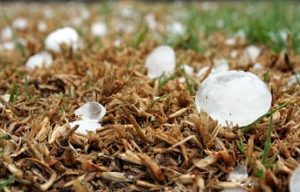 According to the research, hail losses have long been a problem for property insurers’ risk management efforts.
Hail risk can be especially costly to insurers because, unlike other catastrophic perils like hurricanes and wildfires, it can be difficult to identify the storm that caused a hail claim.
In the past, carriers have focused on intense events to predict hail risk, with supporting data confined to storms with hailstones larger than one or two inches.
However, the study Small Hail, Big Problems, New Approach, from ZestyAI and IBHS suggests that high concentrations of small hail are more important than previously thought.
“All hail needs to be accounted for when modelling and ultimately understanding losses,” the report states.
It continues, “Using data from all hail events, not just those with hail that meet the severe criteria of one inch or greater, allows carriers to consider valuable data on smaller hailstone impacts.”
The research says that this will provide “an opportunity to broaden data sets to account for the cumulative effect all hailstorms have on a roof’s susceptibility to damage over time, leading to a claim.”
ZestyAI and IBHS note that the utilisation of this approach could perform as much as 58 times more accurately than looking at events with large and very large maximum hail sizes alone, “allowing carriers to more effectively assess hail risk, achieve more profitable underwriting and open up ratings to previously avoided areas.”
Dr Ian Giammanco, managing director of standards and data analytics at IBHS, commented, “As we’ve learned more about hailstorms, we’ve discovered storms that produce large concentrations of small hail are more common than we thought, and despite causing less individual damage than a single large hailstone, small hail, especially in high concentrations, is likely a meaningful contributor to the loss we see each year from hail.
“Experiments also show large concentrations of smaller hailstones cause degradation to the asphalt shingles, specifically dislodging large amounts of granules.
“Once enough granules are lost, the underlying asphalt material can become more susceptible to ageing and weathering.
“Repeated exposure to these types of hailstorms can shorten the life of an asphalt shingle roof and increase the damage caused by large hailstones in the next storm.”
Attila Toth, founder and CEO of ZestyAI, said, “Hail losses are a persistent problem for property insurers’ risk management efforts.
“Three of the nation’s five largest publicly-traded P&C carriers mentioned hail as a key concern in 2022 financial reports.
“Greater losses have brought attention to hail risk, and the insurance industry needs better approaches to solve this problem.”