AM Best has released its latest analysis of risk across the MENA countries, finding that risks within those nation states largely remain high to very high.
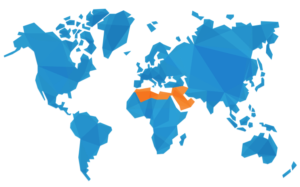 The analysis outlined five country risk tiers (CRT), with one showing that the nation had the lowest level of risk.
Looking at fourteen countries in the MENA region, AM Best assessed five of them as being CRT-5, the same number being CRT-4, and the remainder being CRT-3. No country was listed as being CRT-1 or CRT-2. The nations of Tunisia and Egypt were moved to CRT-5 in 2020 and 2011, respectively. Meanwhile, Bahnrain and Oman were moved to CRT-4 in 2015 and 2018.
Of the five nations—Tunisia, Egypt, Algeria, Lebanon, and Libya—rated at CRT-5, political risk was said to be ‘very high’ in three of them (Egypt and Tunisia were rated as ‘high’). Meanwhile, financial system risk in all bar Tunisia was rated as ‘very high’.
The authors of the AM Best report wrote at this point: “It is important to note that AM Best’s determination of country risk is not directly comparable to a sovereign debt rating, which entails an evaluation of the ability and willingness of a government to service its debt obligations. Although country risk has a bearing on the overall rating assessment, particularly for a company operating in CRT-3 to CRT-5, there are (re)insurers with higher ratings than the sovereign rating; these have demonstrated that they can absorb and mitigate risks arising from their operating environment—a key consideration when evaluating country risk in the assessment.”
Taking a broader view, AM Best said that growth in the insurance segment, particularly in the countries on the Gulf Cooperation Council, was set to remain high when compared to most mature markets, despite inflationary and supply chain issues.
The company did, however, warn on inflation, writing: “Oil importing countries in the region could see inflation skyrocket in the near-term, with the International Monetary Fund (IMF) predicting inflation could be as high as 17%.”